
Solid-colour surfaces and glazes
Applying glazes creates solid-colour surfaces and contemporary finishes. Colour and visual effect are selected for the project, including designs that do not call for decoration.
Discover how Artesole works Etna lava stone through design, CNC cutting and shaping to create bespoke, solid-colour, decorated and contemporary surfaces.

Ceramising Etna lava basalt makes it possible to use an ancient material in an original, contemporary way. The result is ceramised lava basalt, where the strength of stone meets the expressive possibilities of glaze.

In Giarre, on the slopes of Mount Etna, artistic lava stone creations take shape at Artesole. Here design, material working and artisan decoration come together, combining technical expertise, experience and attention to detail.
The material passes through a coordinated sequence: basalt selection and design, cutting and shaping, surface finishing, decoration and firing.

Large basalt blocks are extracted from quarries at the foot of Mount Etna for further processing. The volcanic stone is selected according to its intended use, from construction and furnishings to artistic work.
The blocks are then cut and prepared as semi-finished pieces, creating the basic forms for the stages that follow.
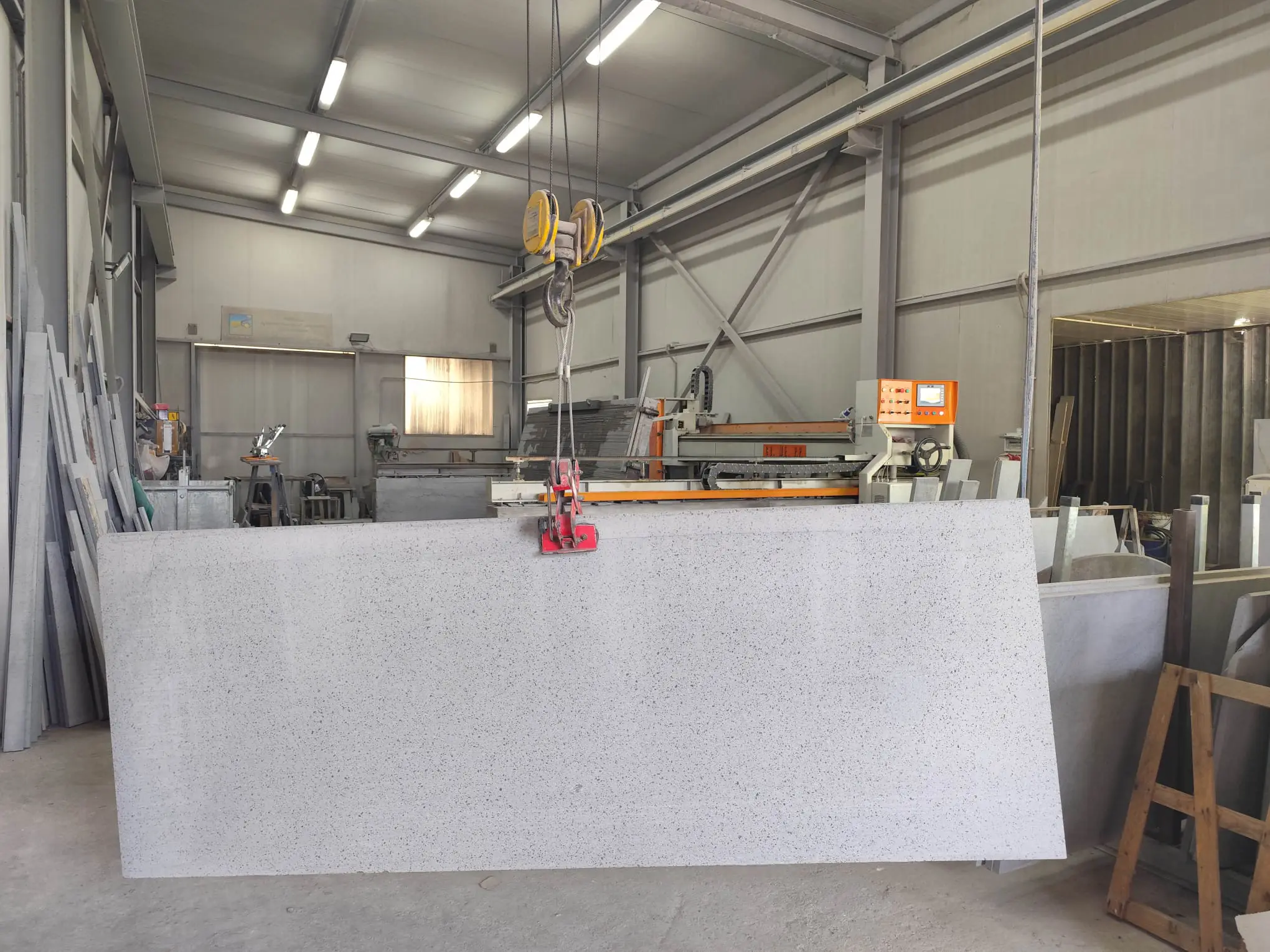
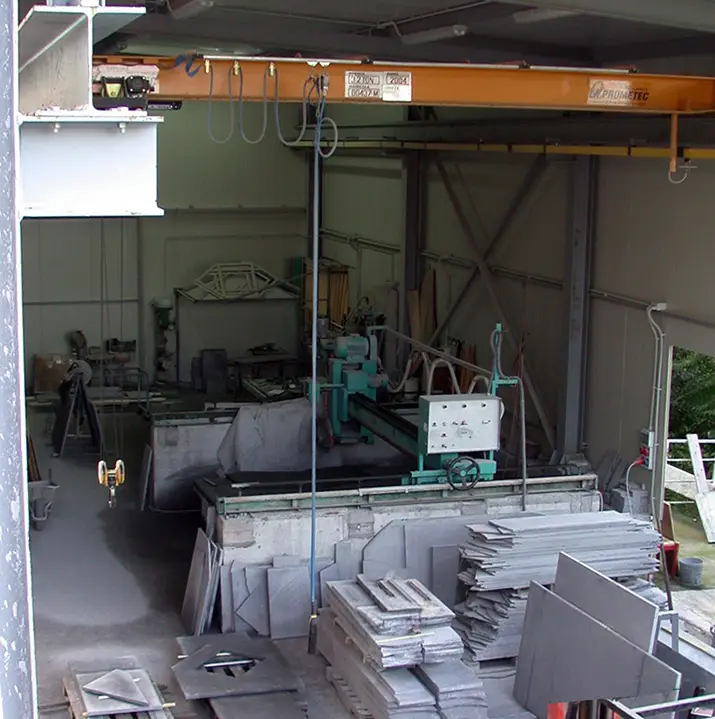
At Artesole’s premises in Giarre, our specialists inspect the raw material before further processing. The workspace and lifting systems allow sizeable slabs to be handled safely throughout the different stages.
Each slab is assessed here and assigned to the most suitable workflow, from a single component to a bespoke creation.
The design guides the transition from drawing to material. Forms and dimensions are defined before CNC machining and the necessary finishing stages begin.

Before machining, we define dimensions, form and intended use. CAD programs support 2D drawings and graphics as well as 3D project development, translating the client’s requirements into production instructions.


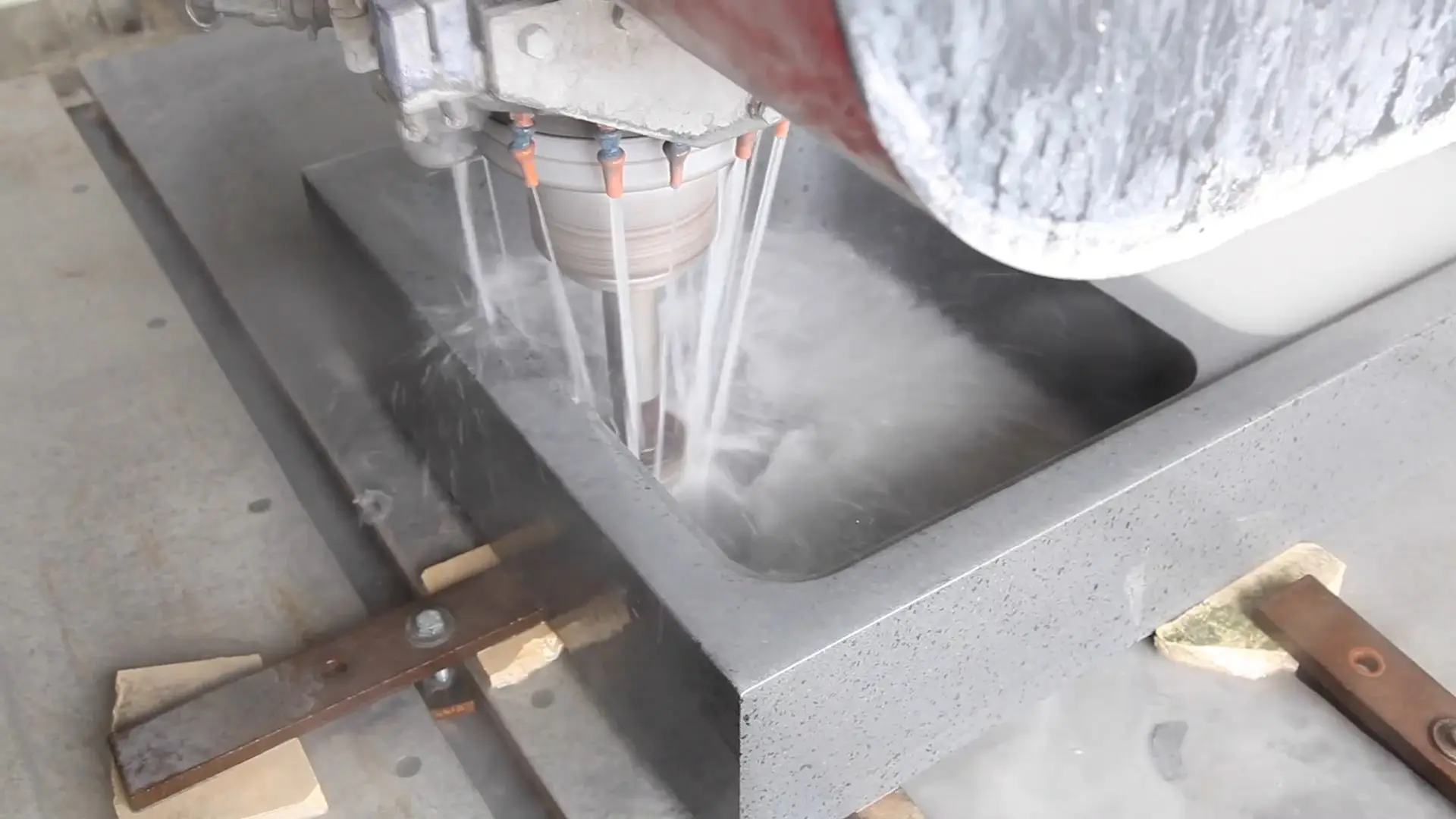

CNC machinery and cutting equipment translate the design into bespoke forms and dimensions, preparing lava stone for worktops, cladding, architectural features and furniture elements.

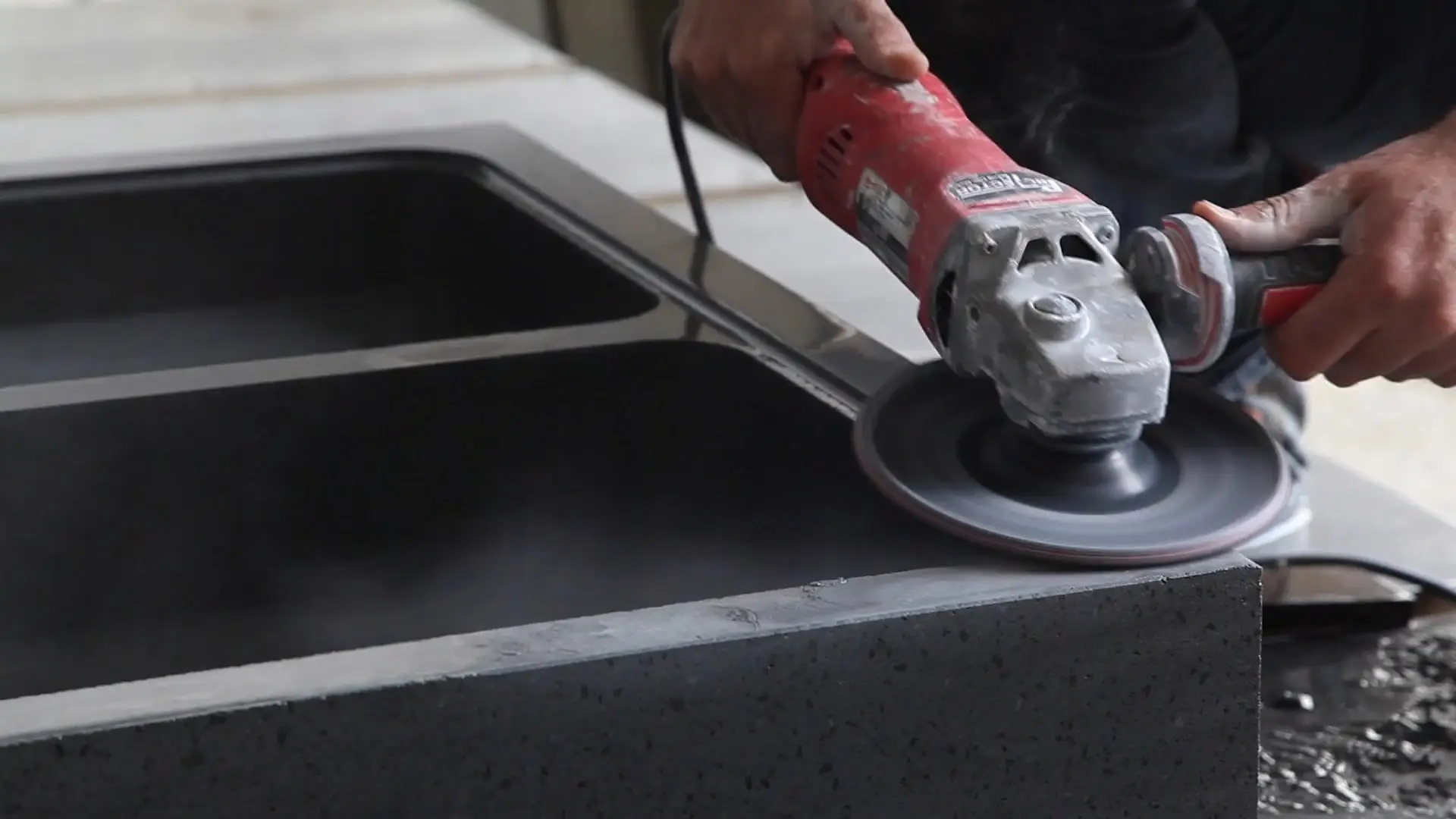
After machining, each piece is finished and prepared for the subsequent surface stages. Edges, profiles and surfaces are checked against the design and intended use.


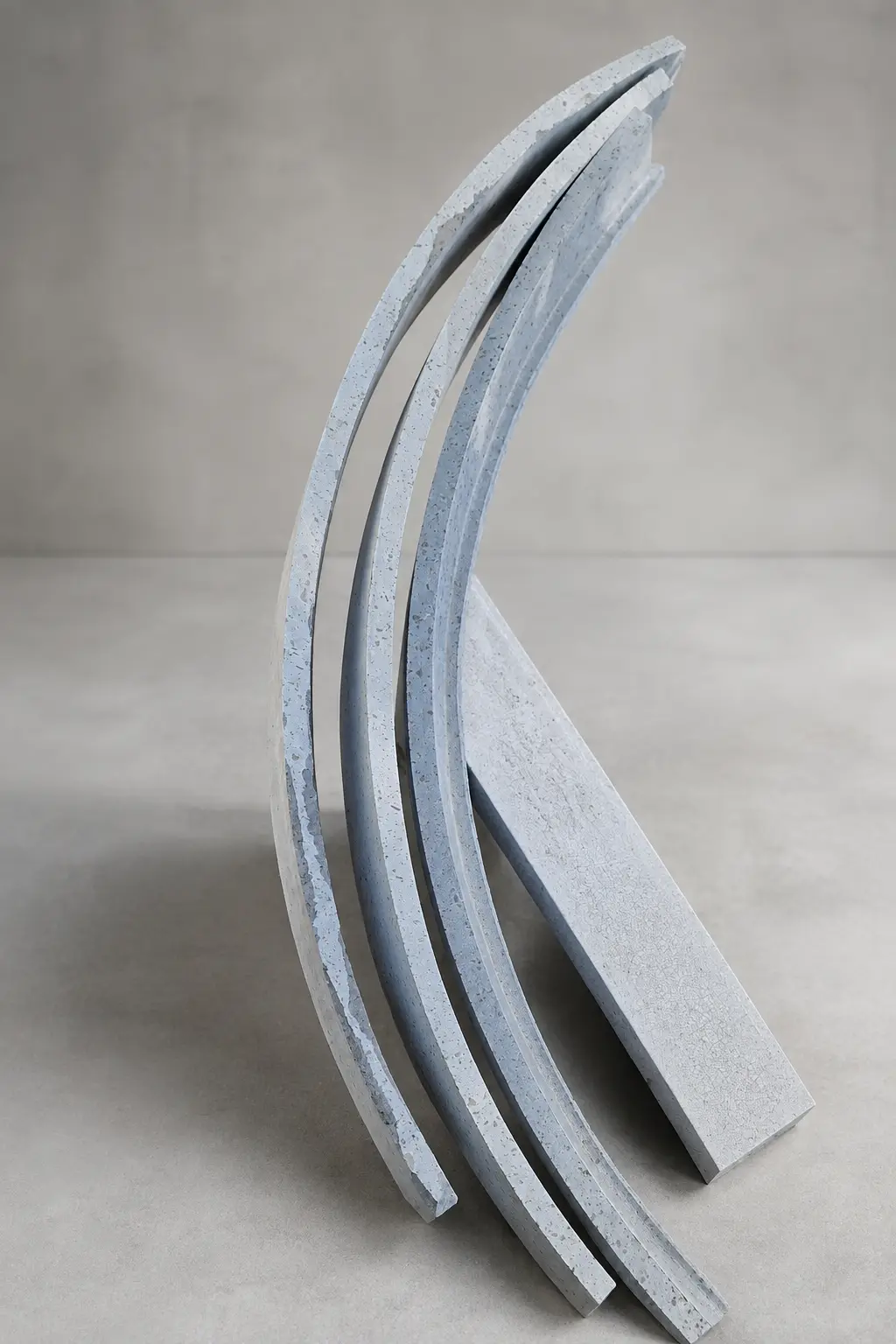
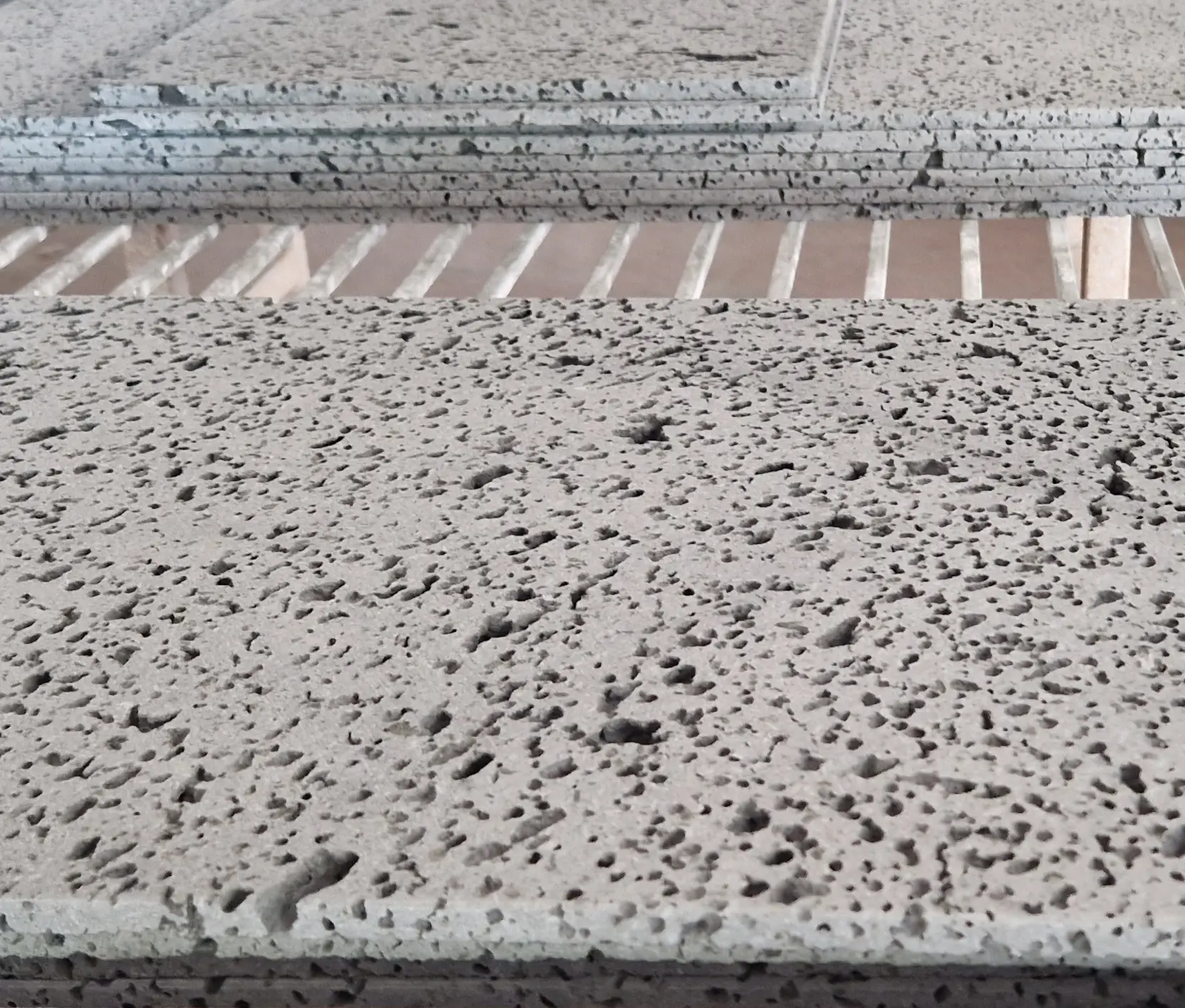

Once shaped, the lava stone is prepared for the chosen finish. Glazes, transparent glaze coatings and any pigments help define the surface and bond with the stone during firing.
Applying glazes creates solid-colour surfaces and contemporary finishes. Colour and visual effect are selected for the project, including designs that do not call for decoration.

For work rooted in tradition, Artesole’s decorators paint the motif by hand on the prepared surface. Colours and composition can be tailored to the piece.
The shaped and glazed material, with or without decoration, is fired at approximately 950°C. This long, delicate cycle is monitored carefully because temperature changes could compromise the work completed beforehand.
After around 56 hours, including heating and cooling, the pieces are removed from the kiln and inspected before packing.

A solid-colour top shows the clean-lined side of ceramised lava stone for interior design, furniture and contemporary architecture.

A hand-painted table represents the artistic, traditional branch: the same material and production cycle take on a different visual language.
Kitchen worktops, work surfaces for bars and restaurants, and tables are just some of the possible applications. The ceramised surface withstands contact with everyday substances such as vinegar, oil and lemon juice. When a project includes decoration, it is painted by hand and can be personalised on request.
Bespoke surfaces, colours and finishes reveal the versatility of Artesole lava stone in interiors and everyday objects.


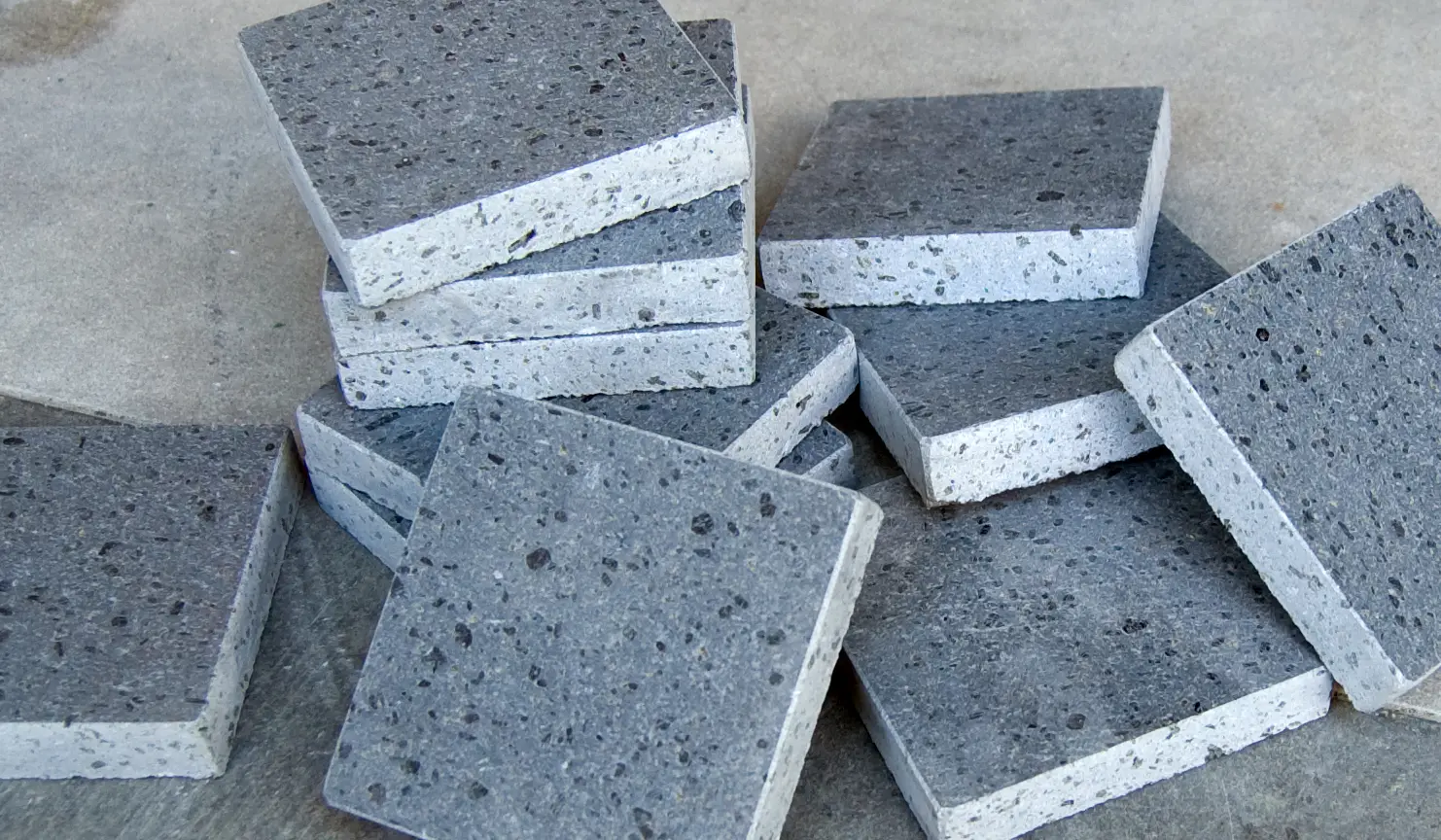
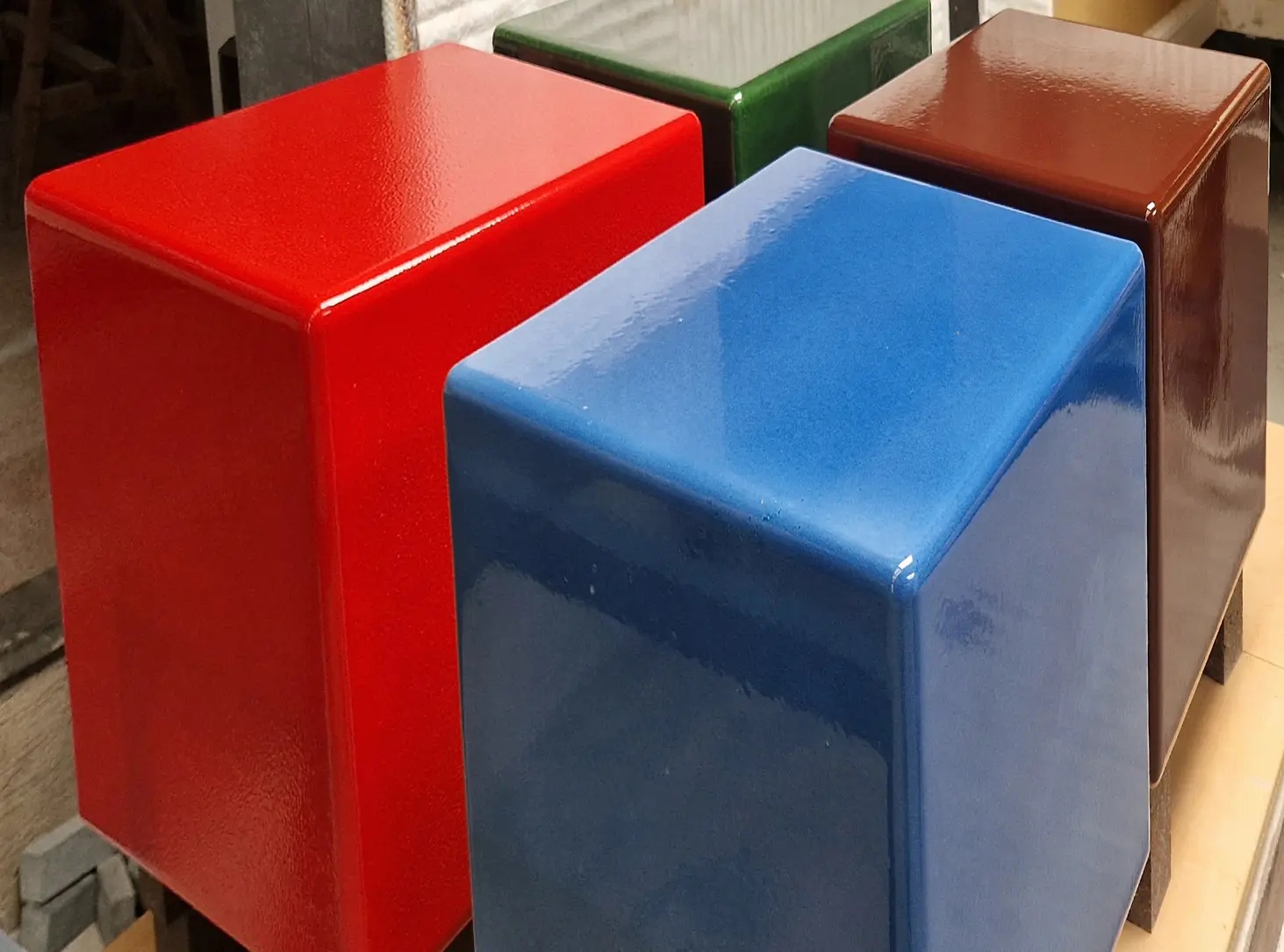
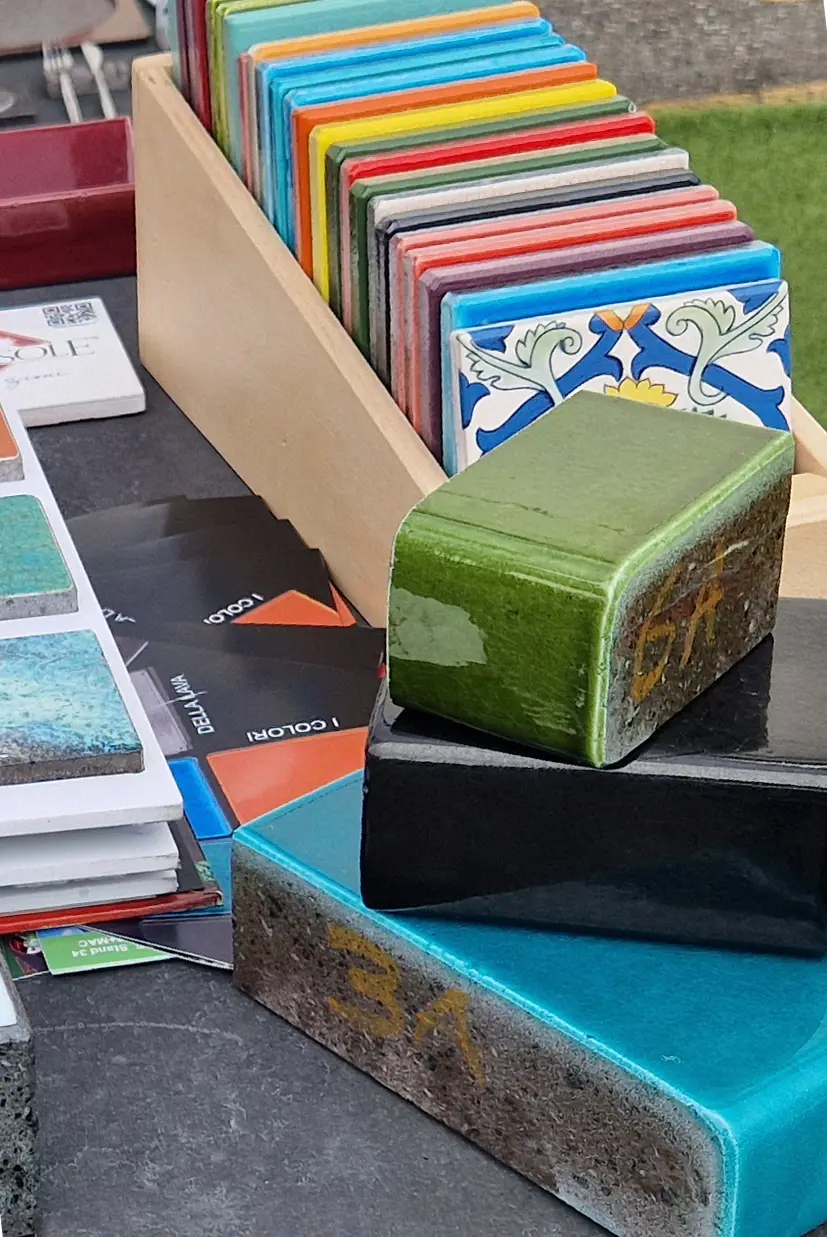


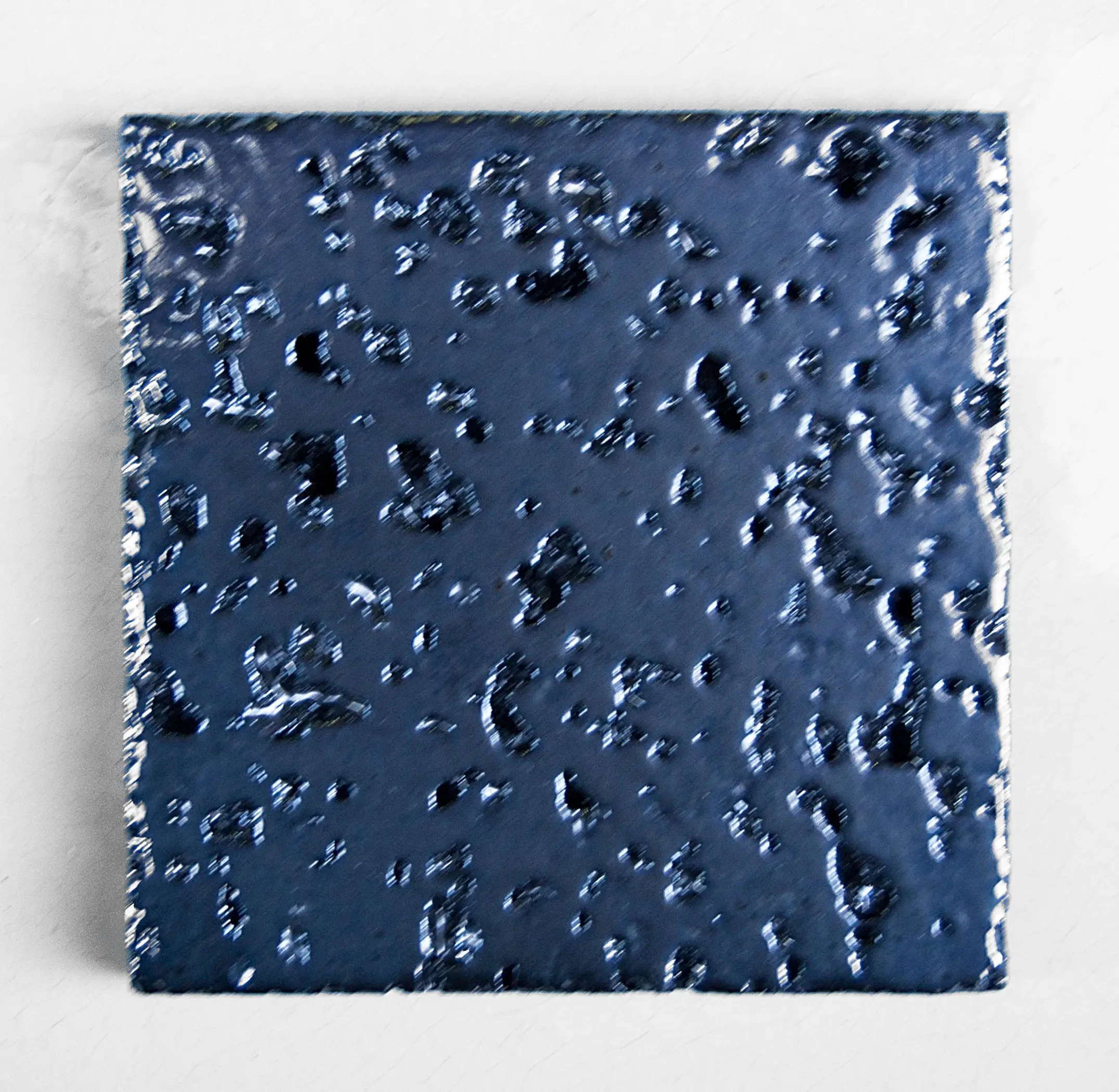


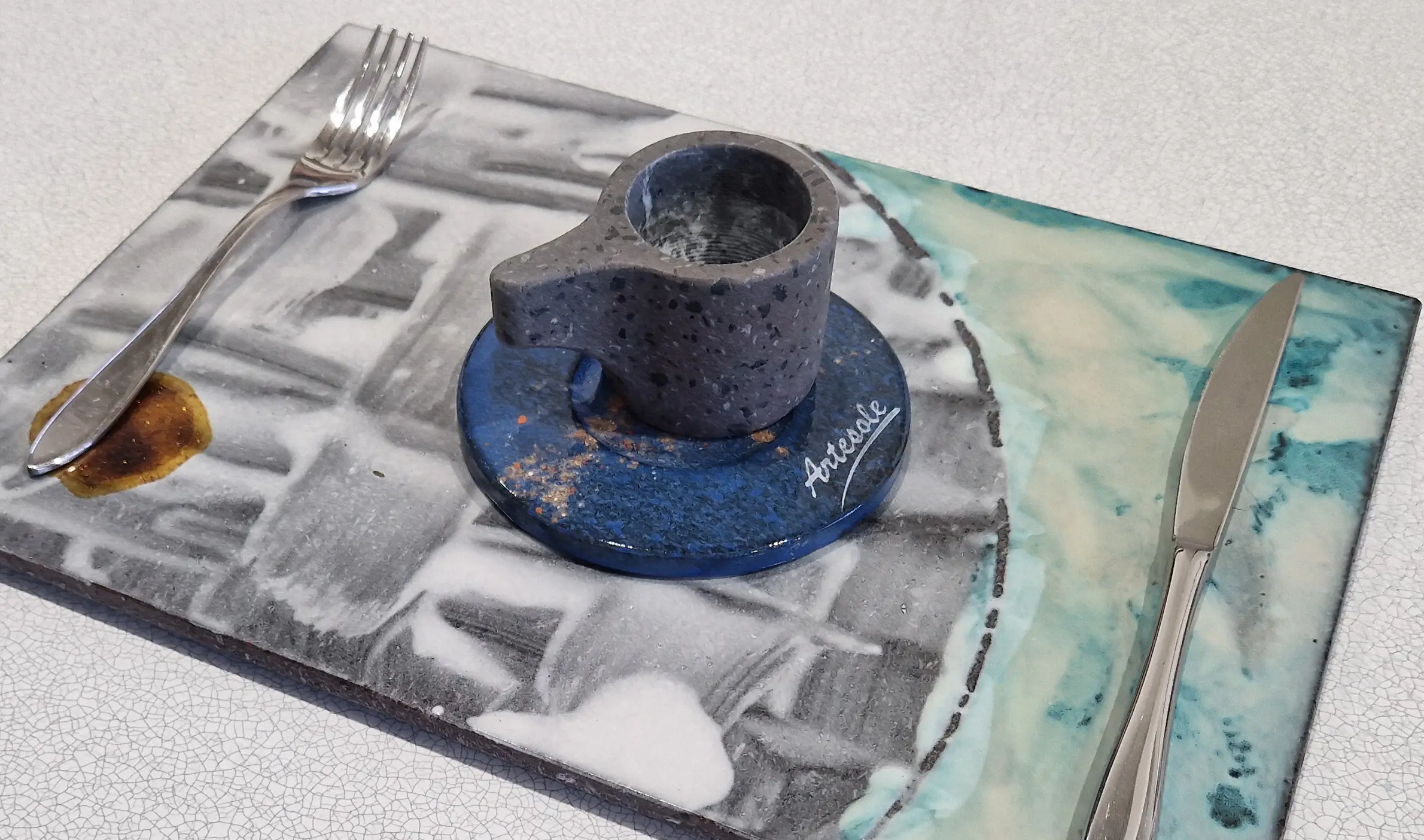


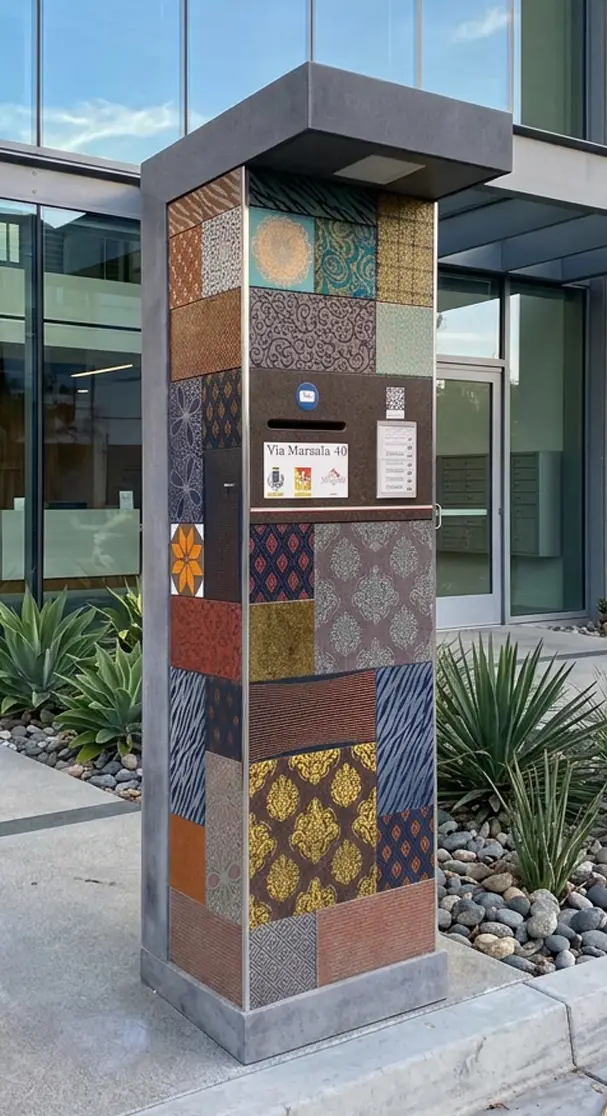
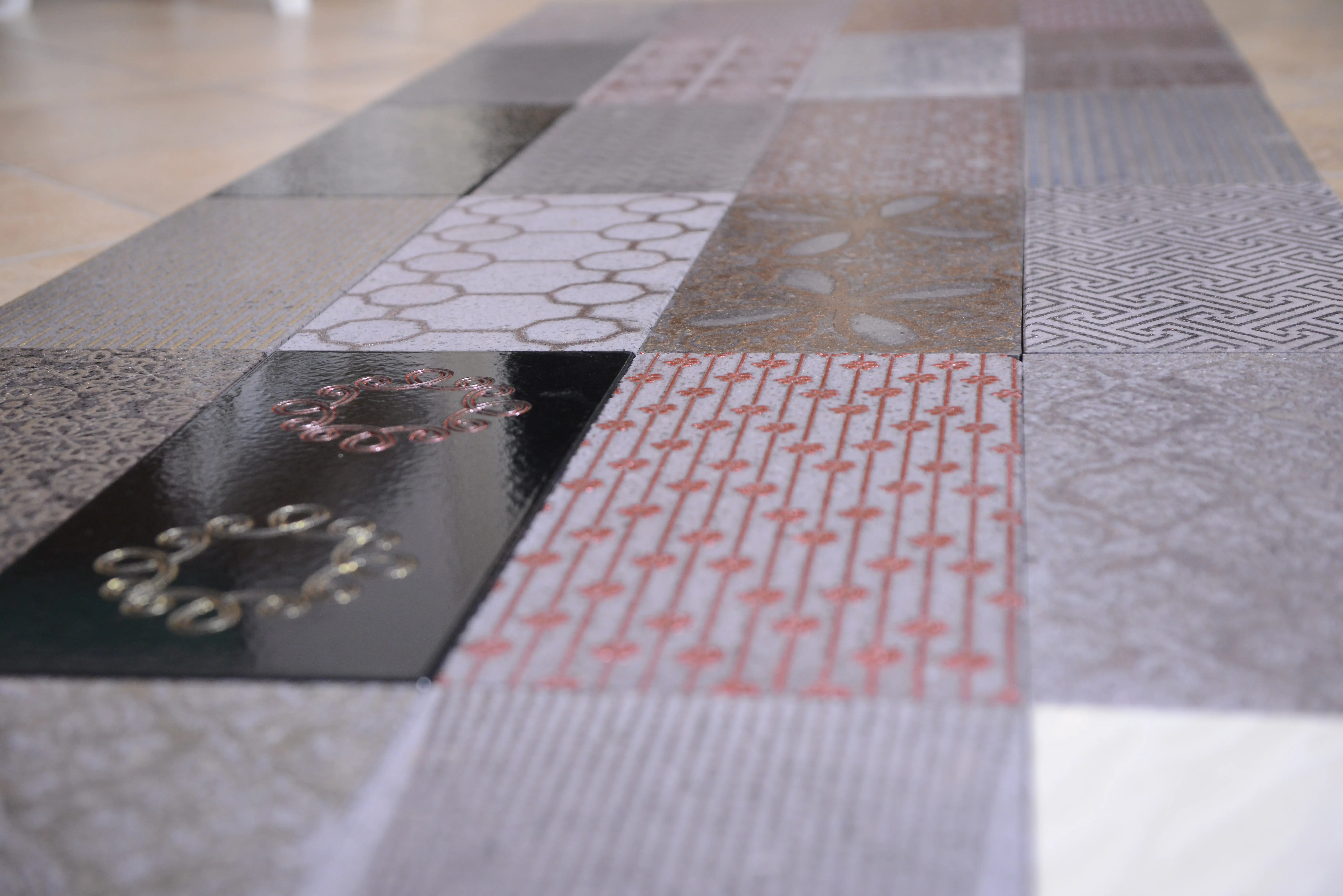
Lava stone surfaces are multifaceted and splendid materials, they are used in architectural and design applications because they can be made in different colors and thicknesses.
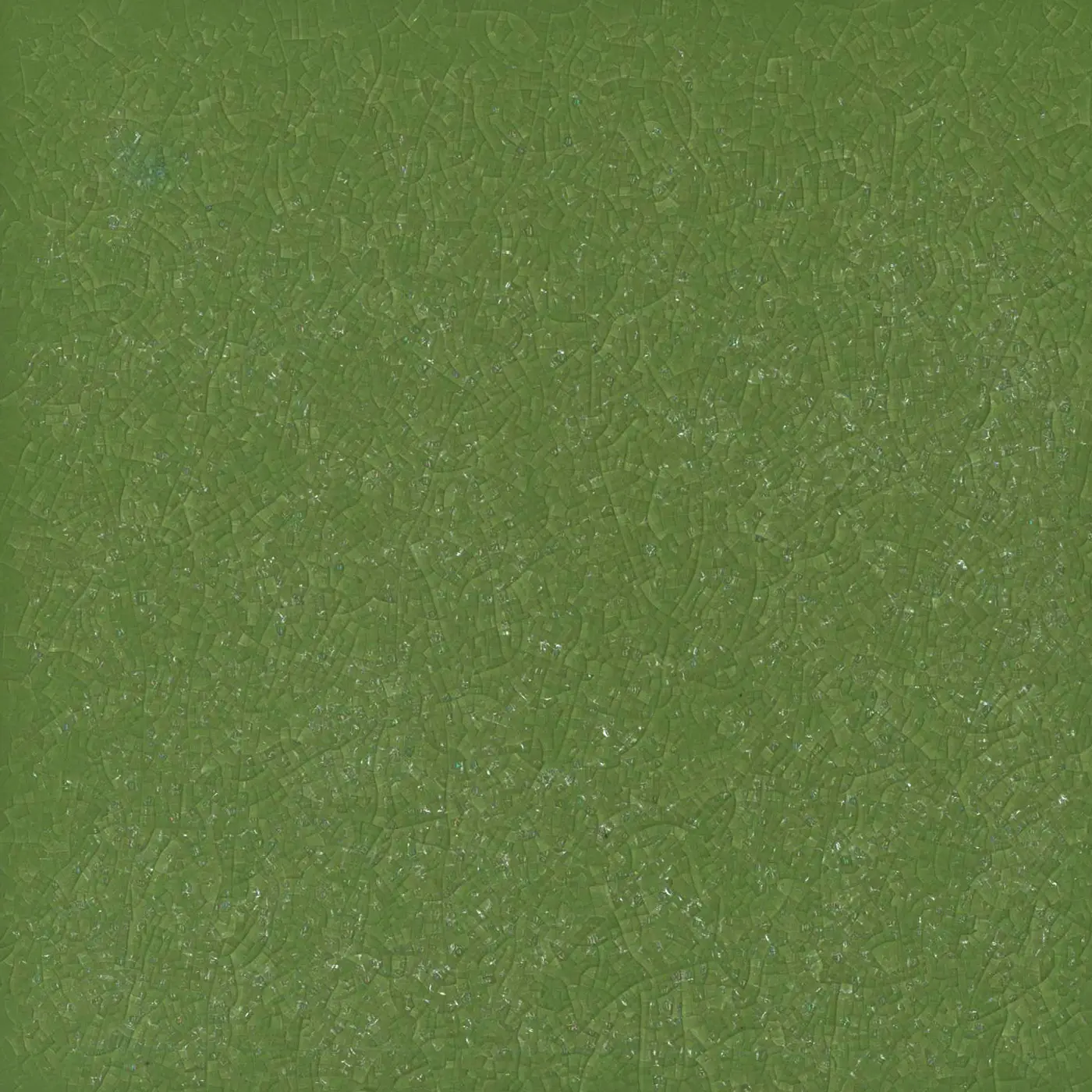
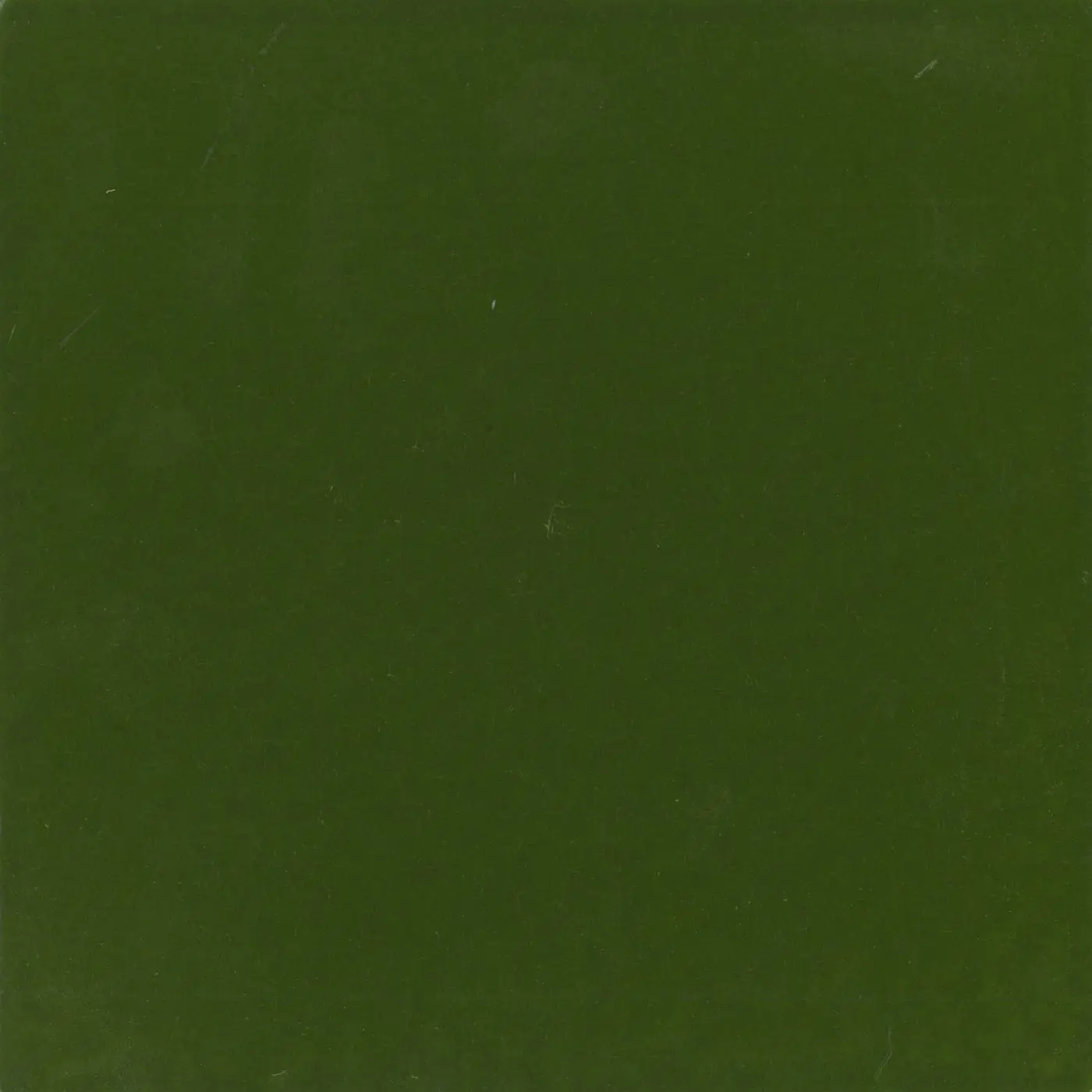
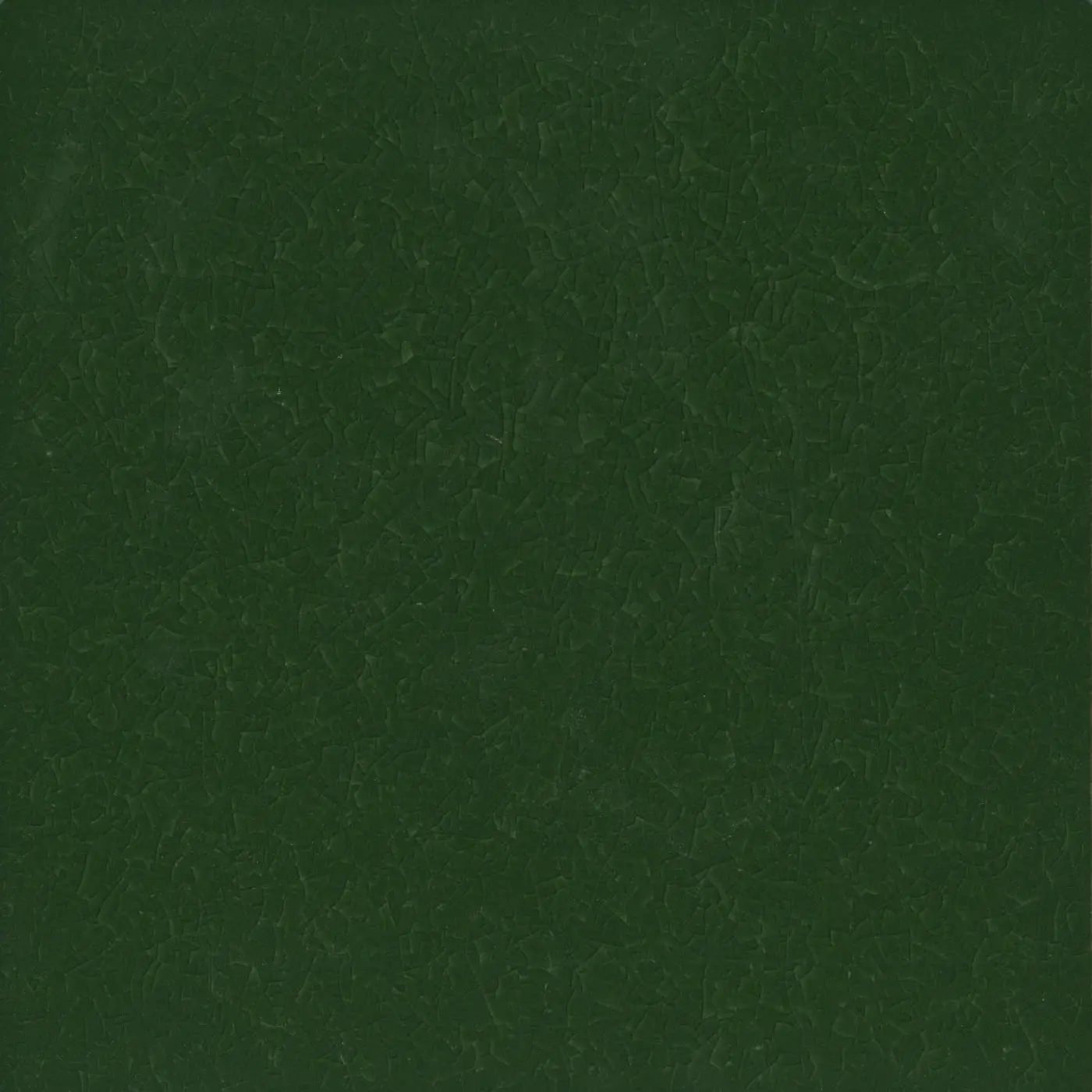

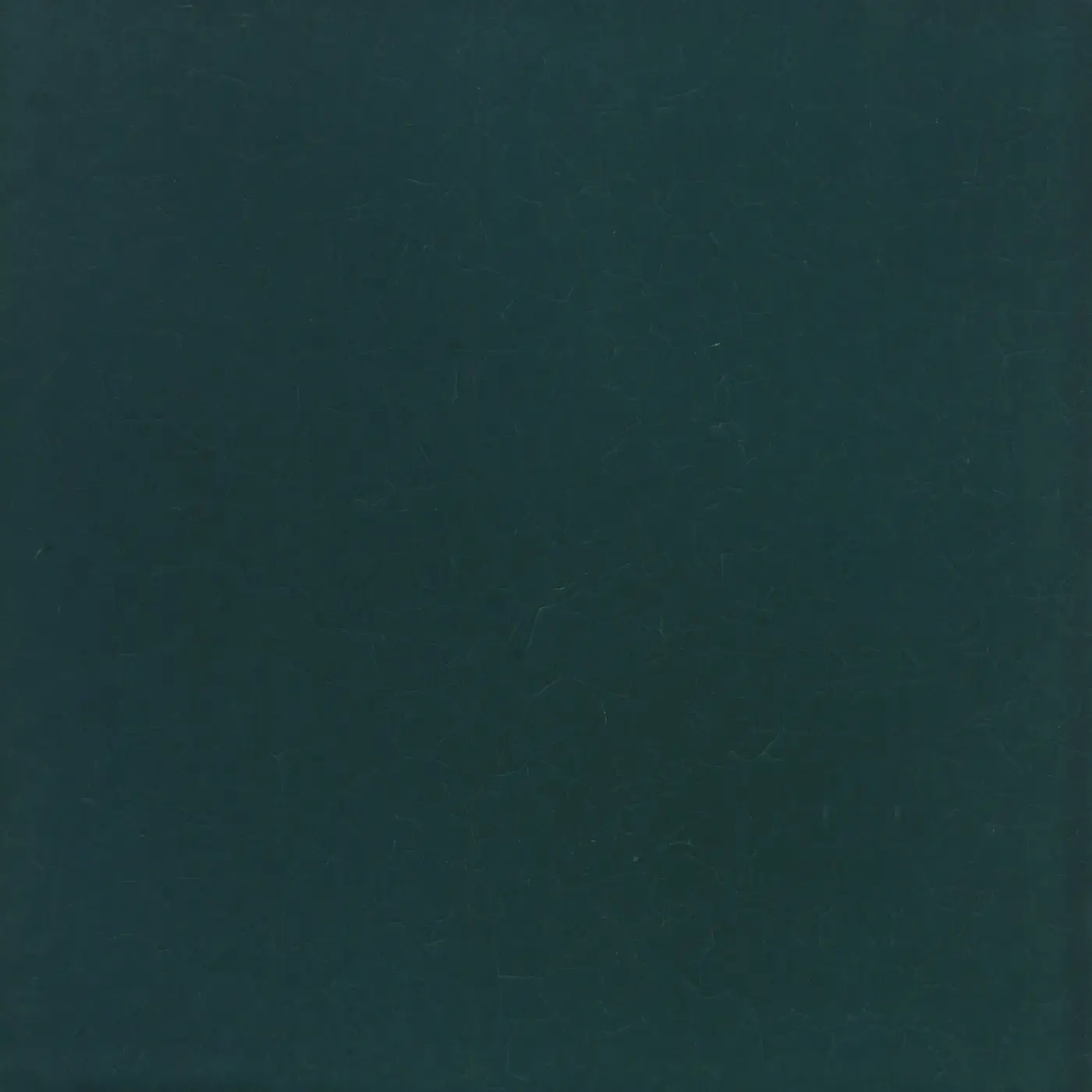
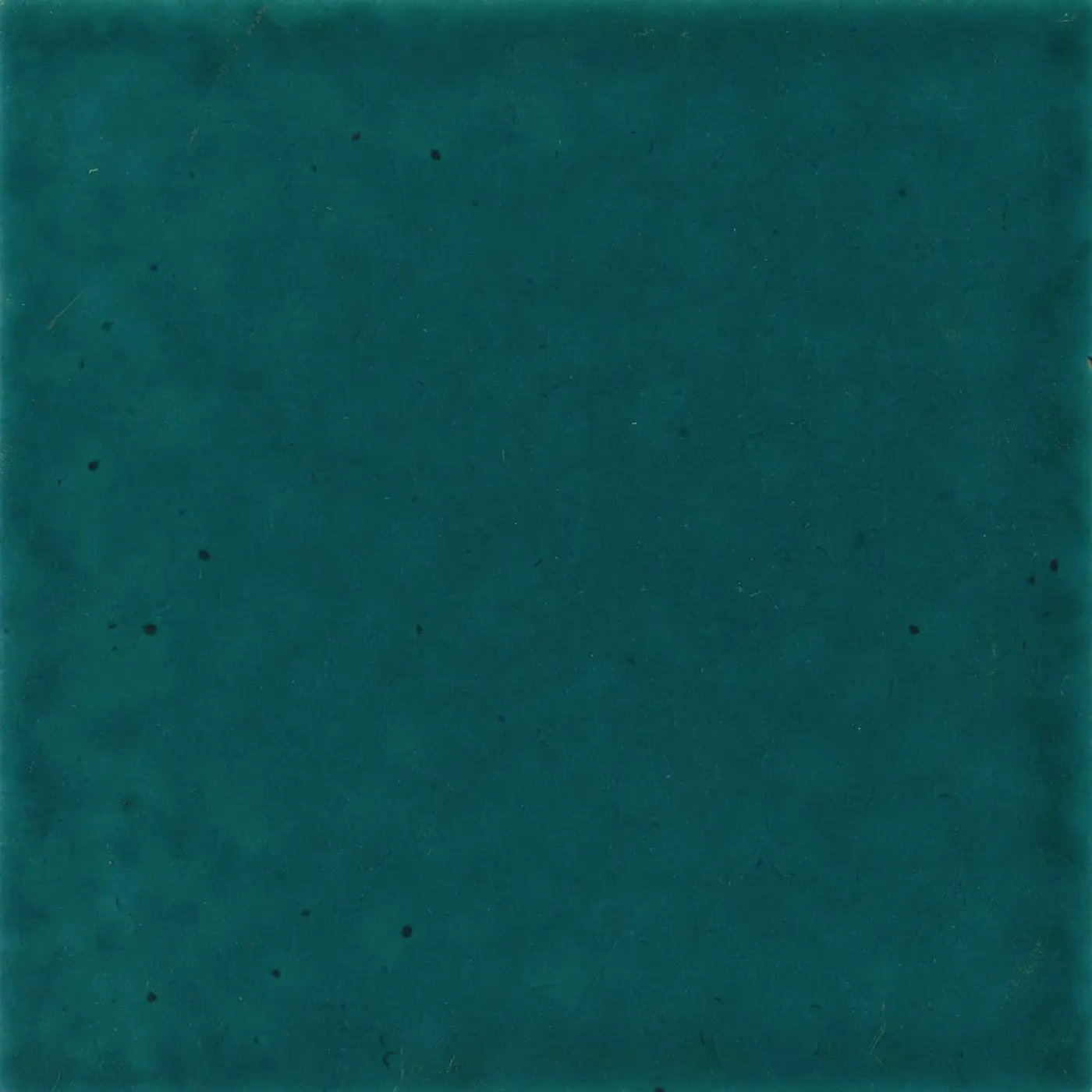

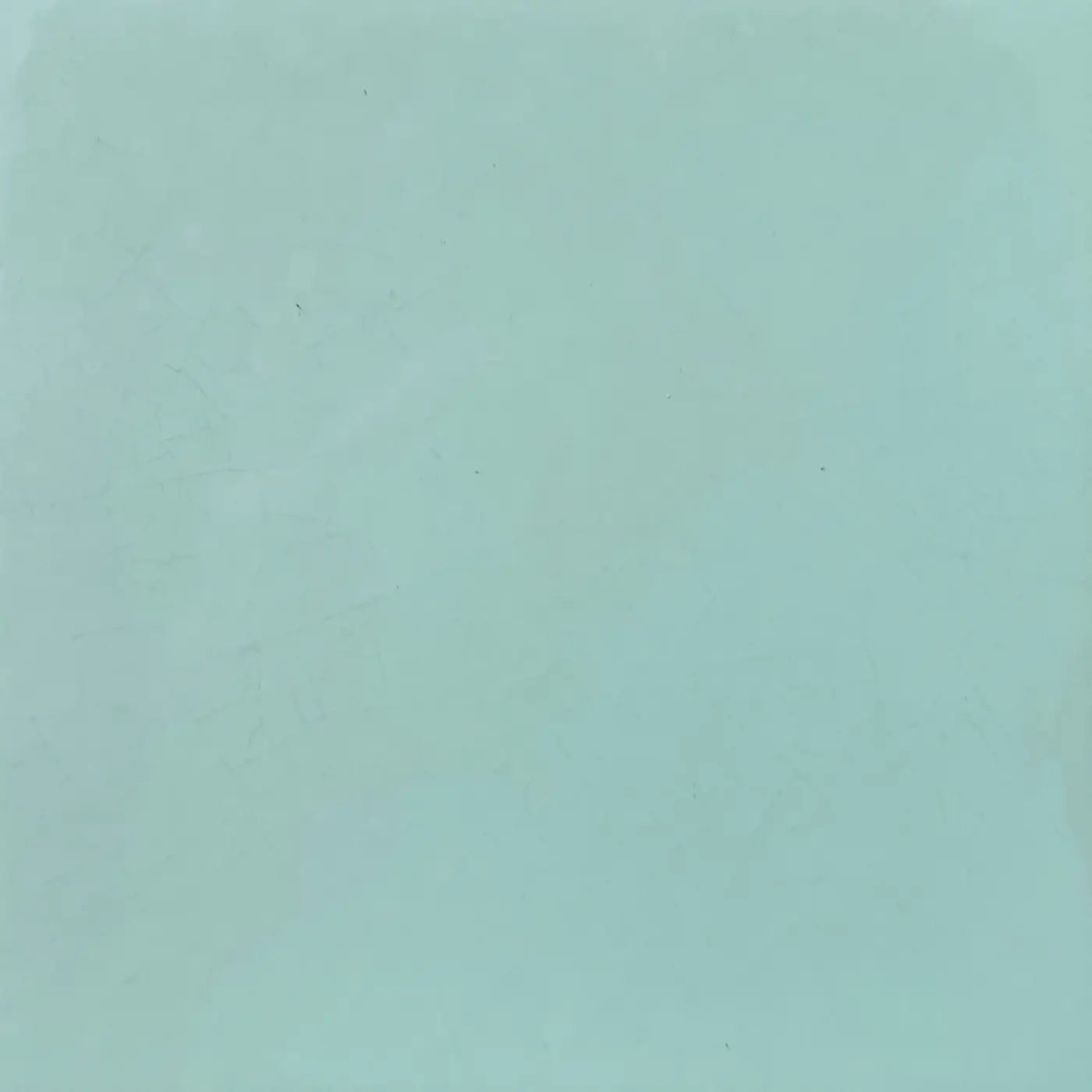
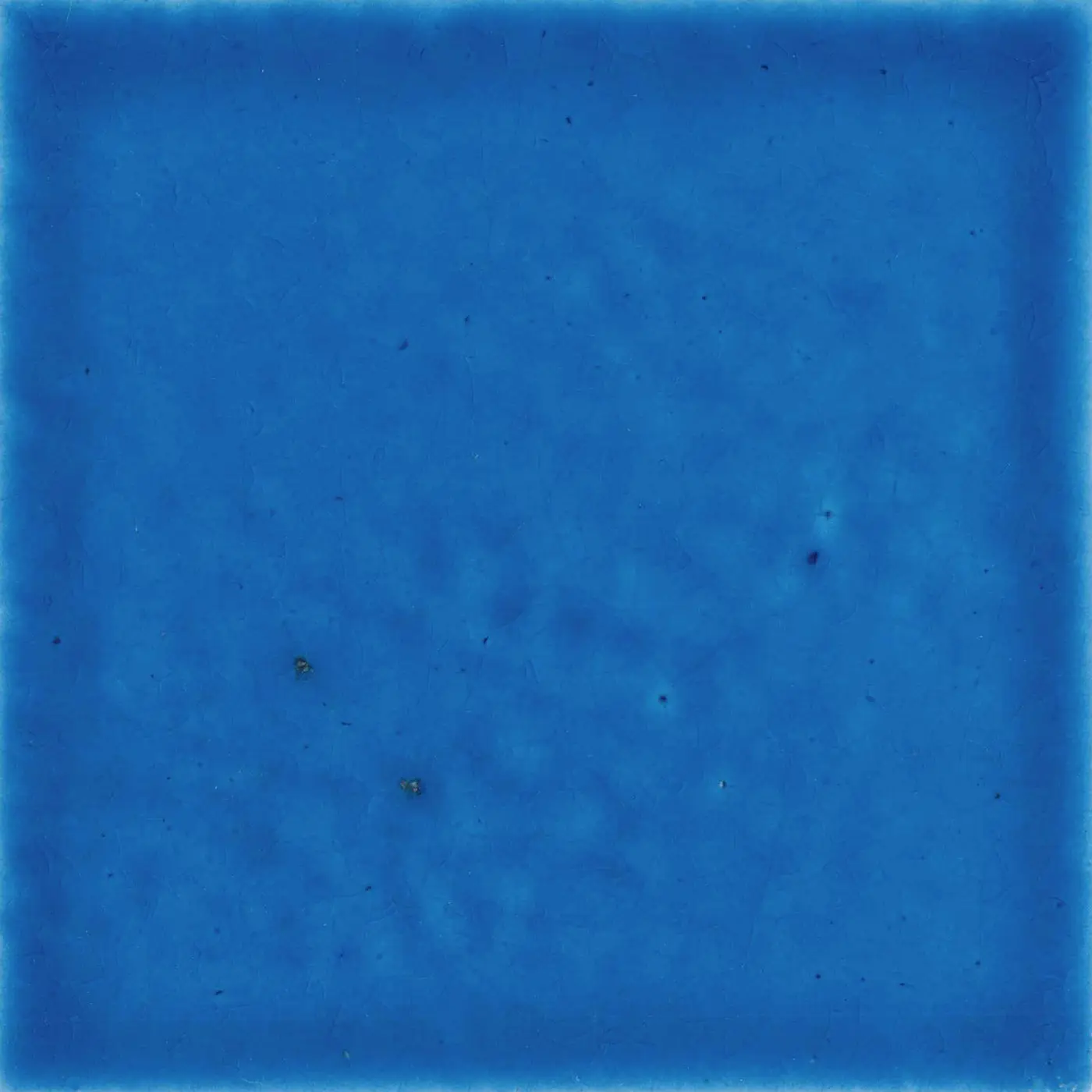

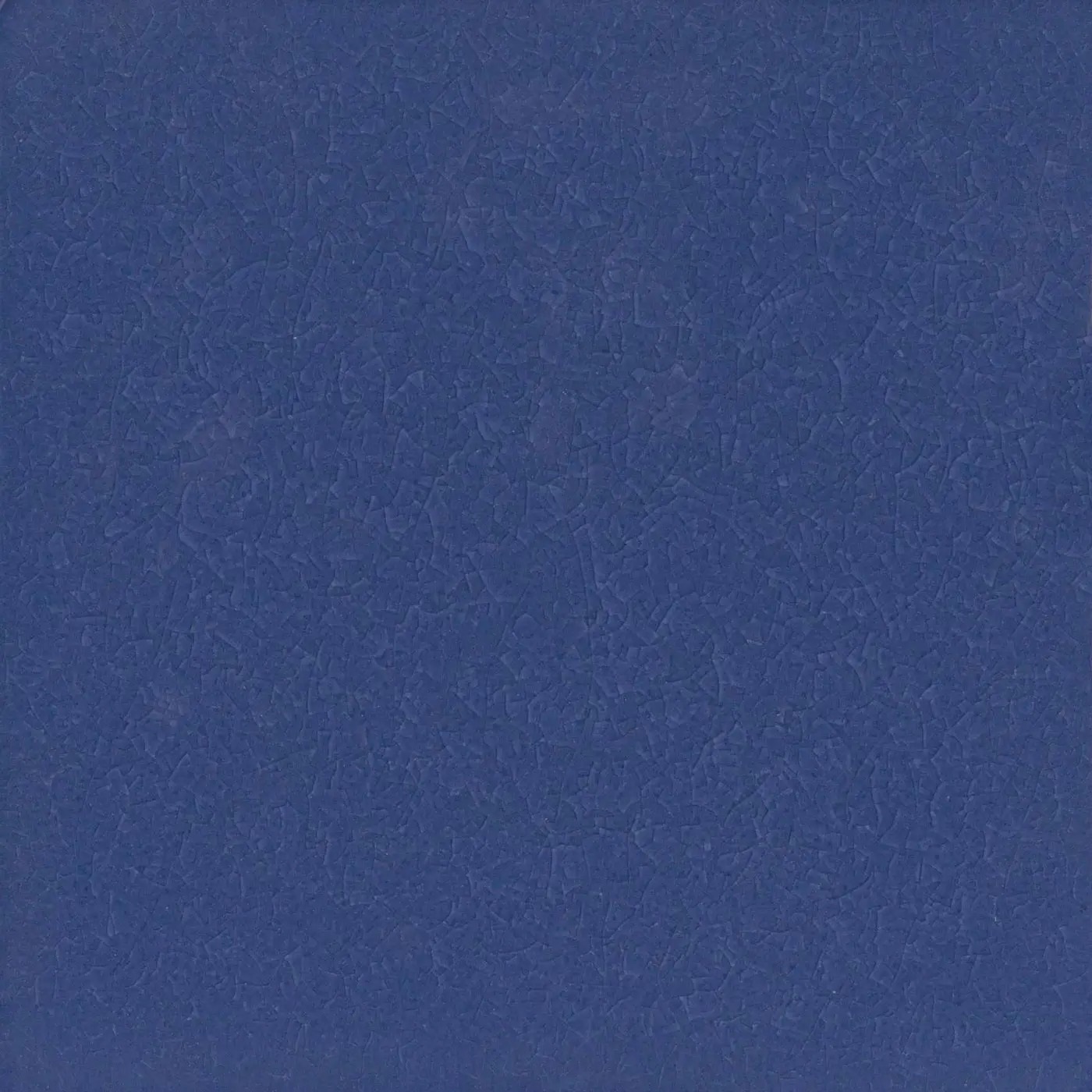


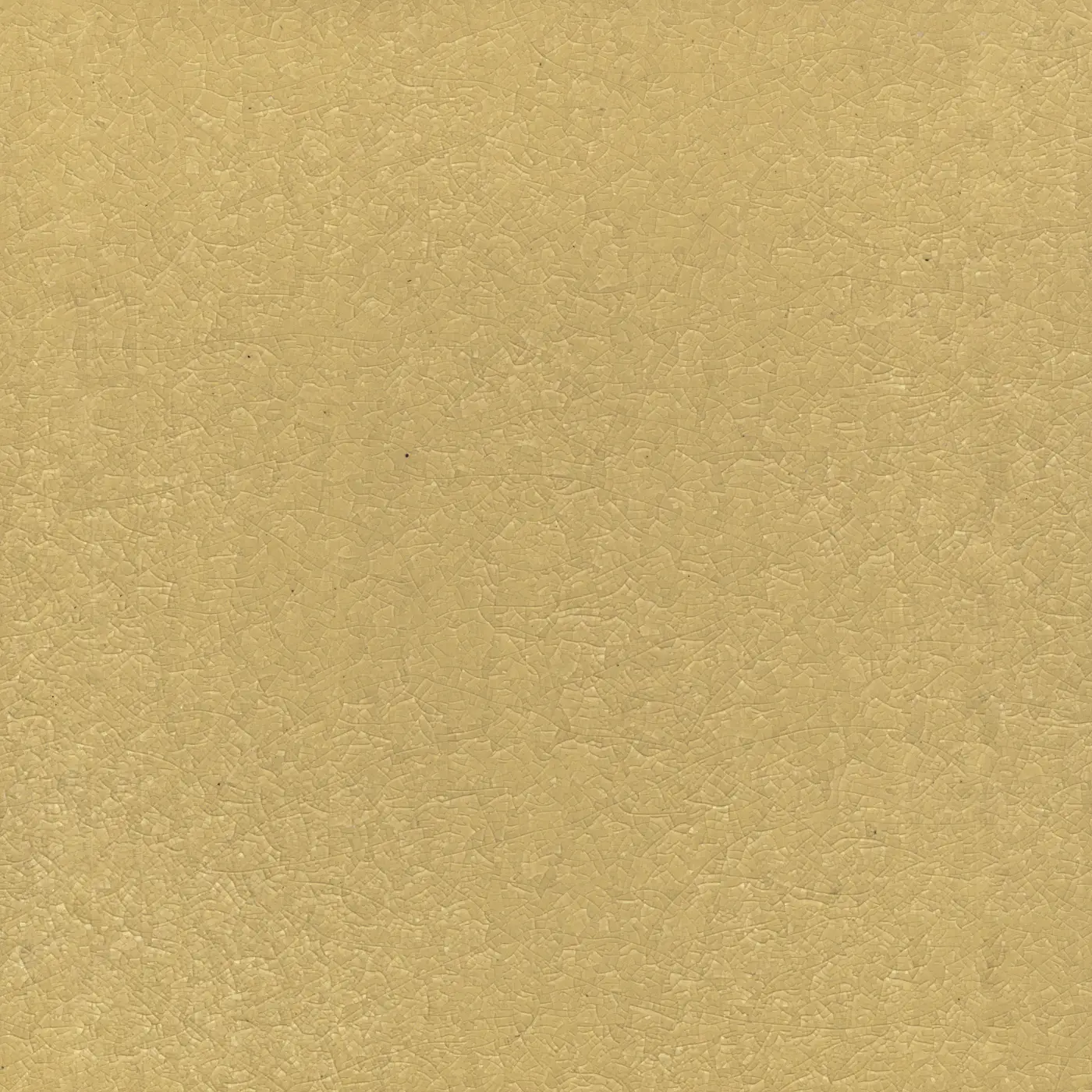
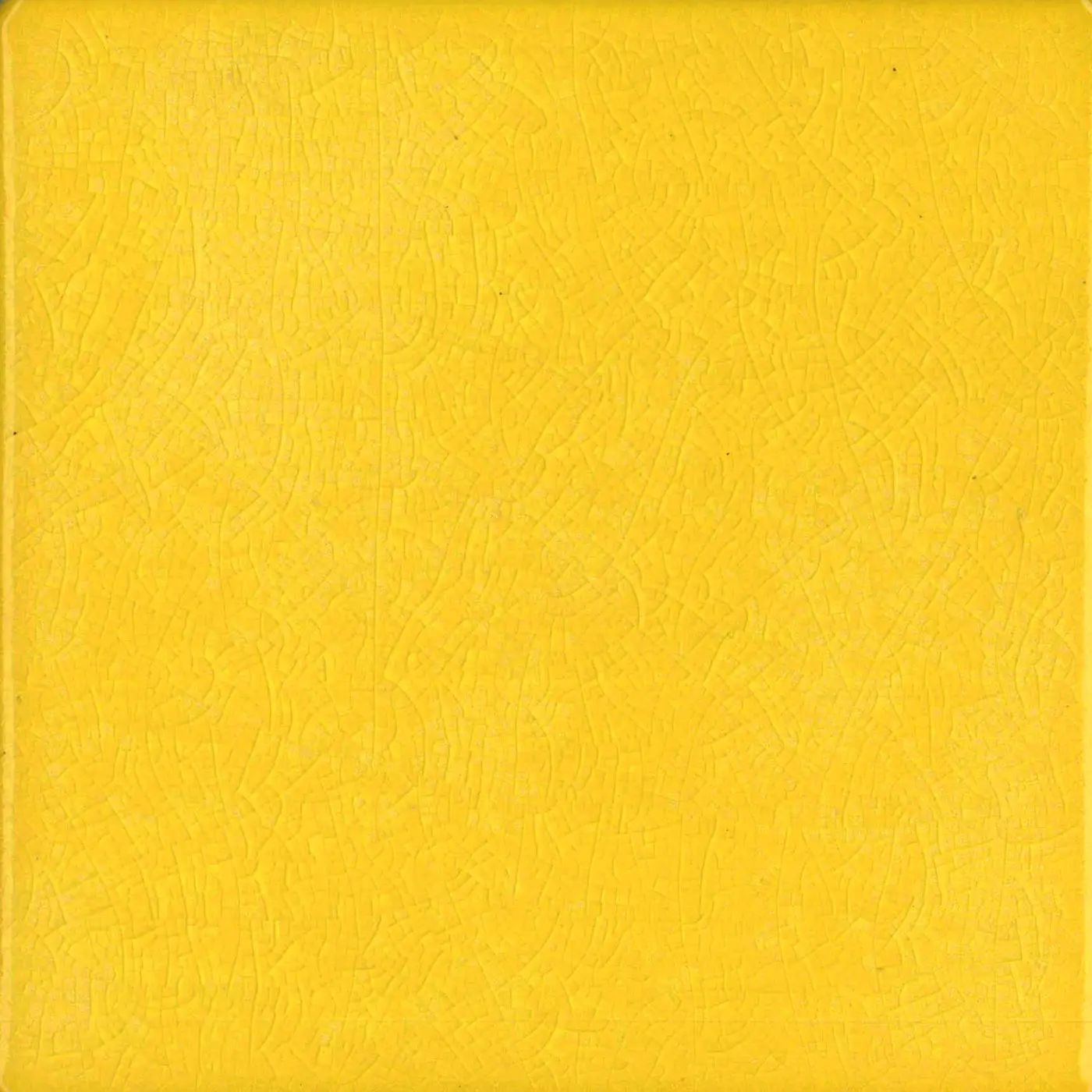
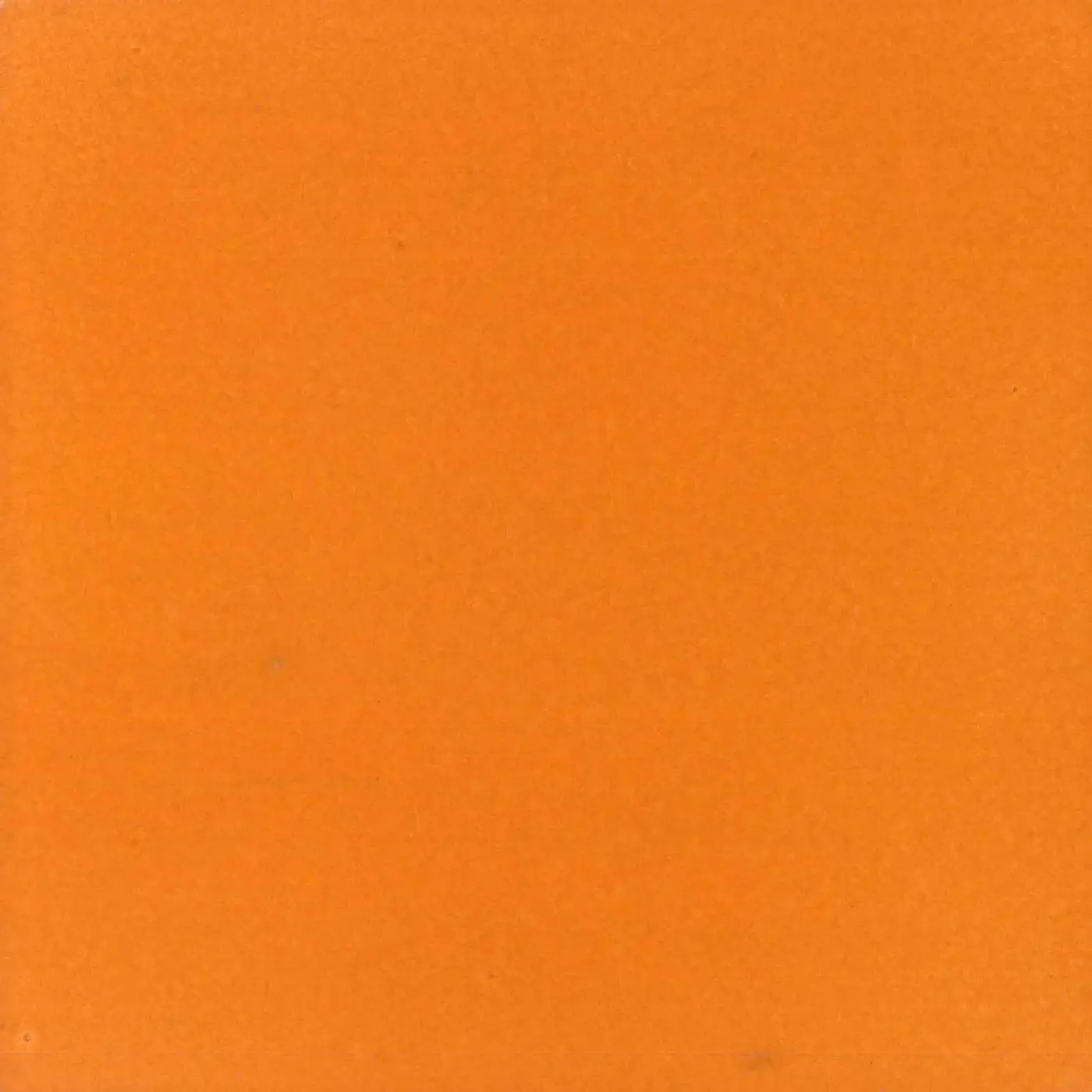
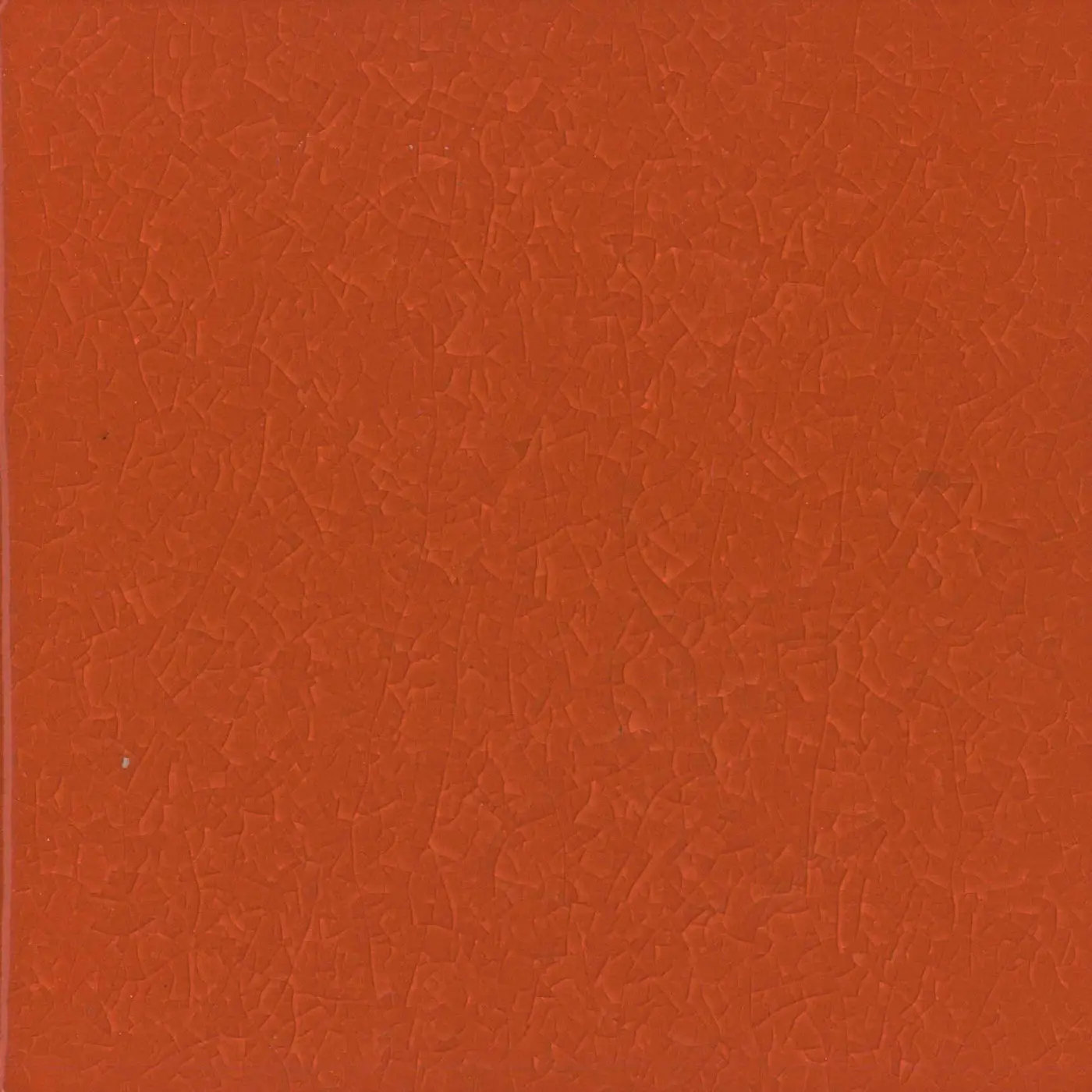


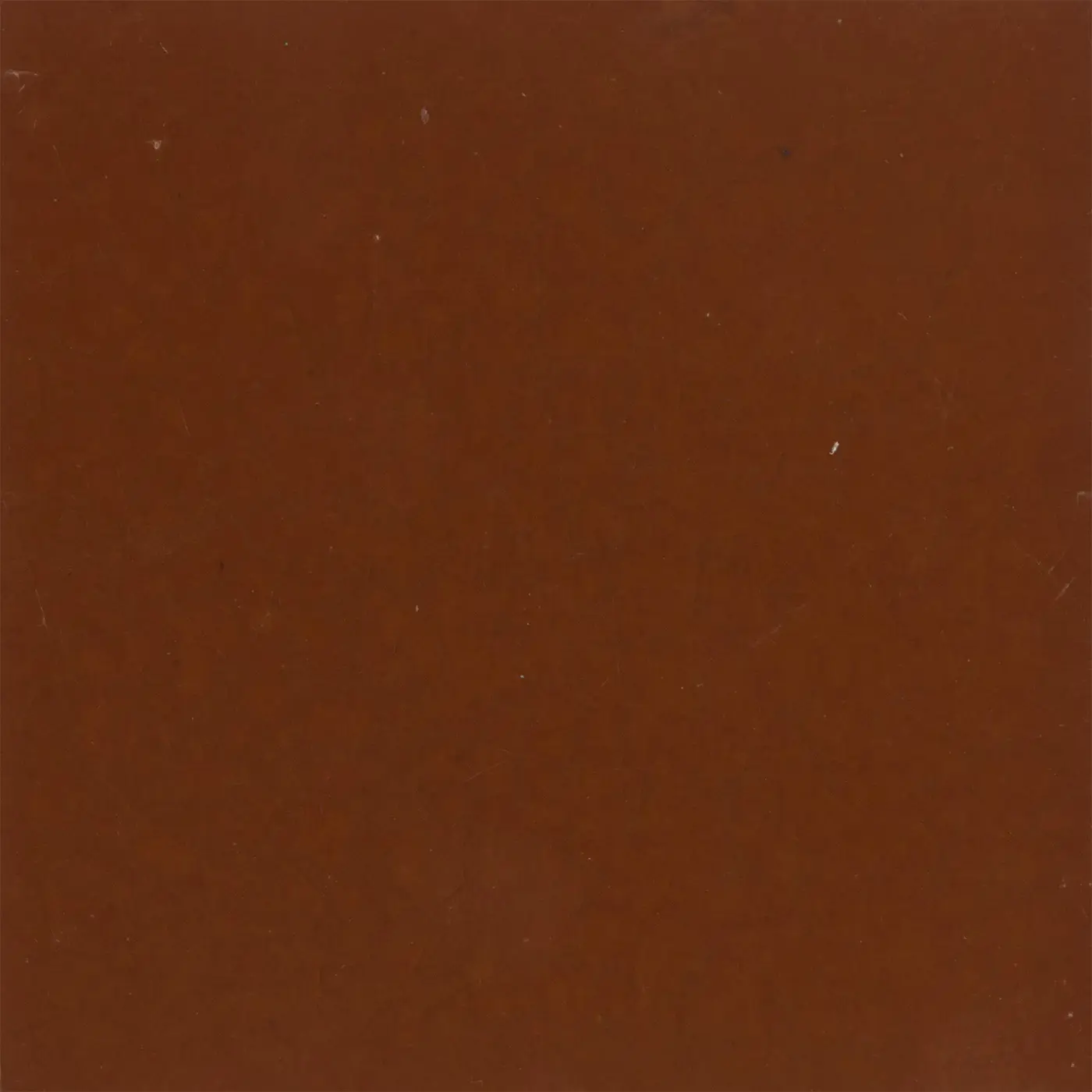
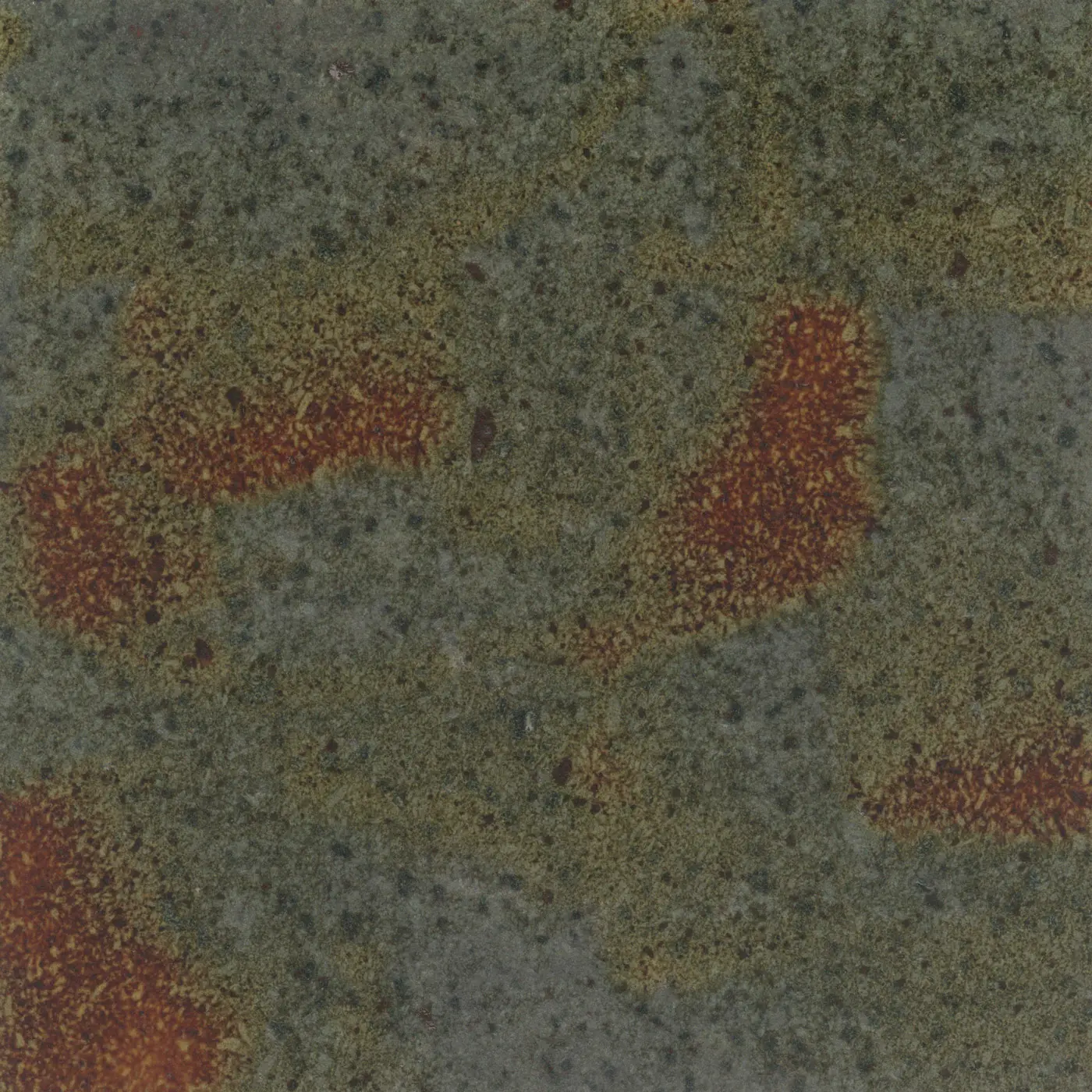
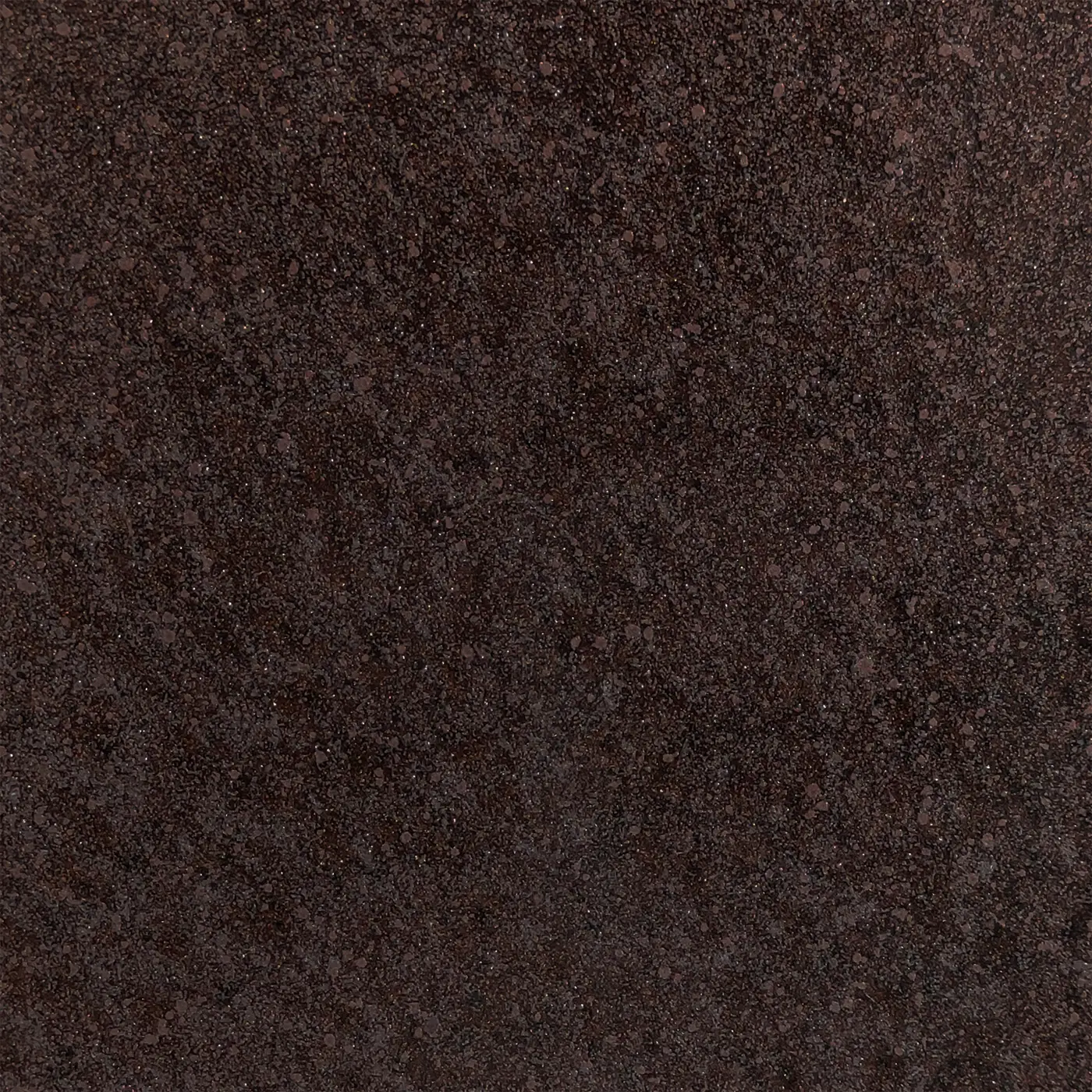

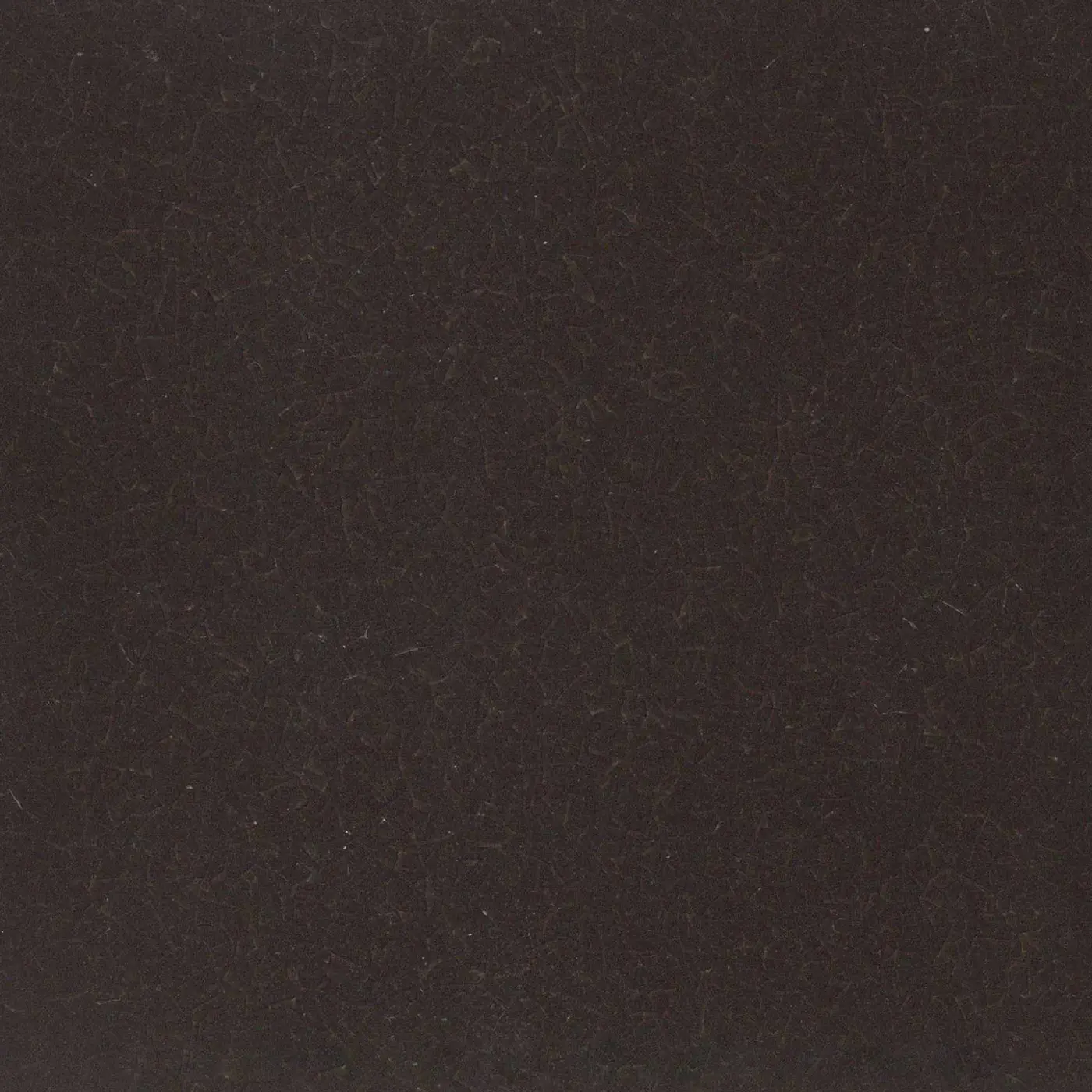

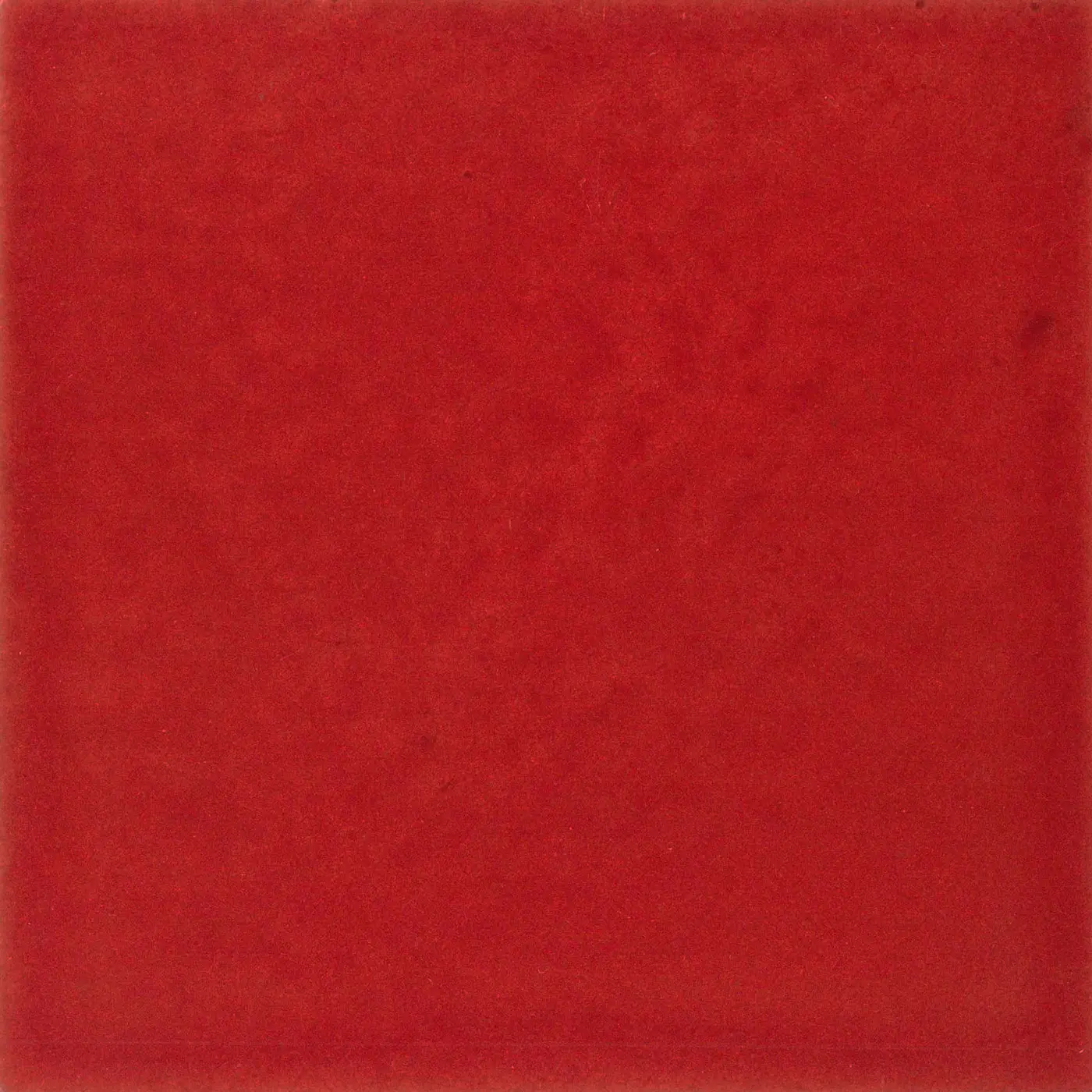
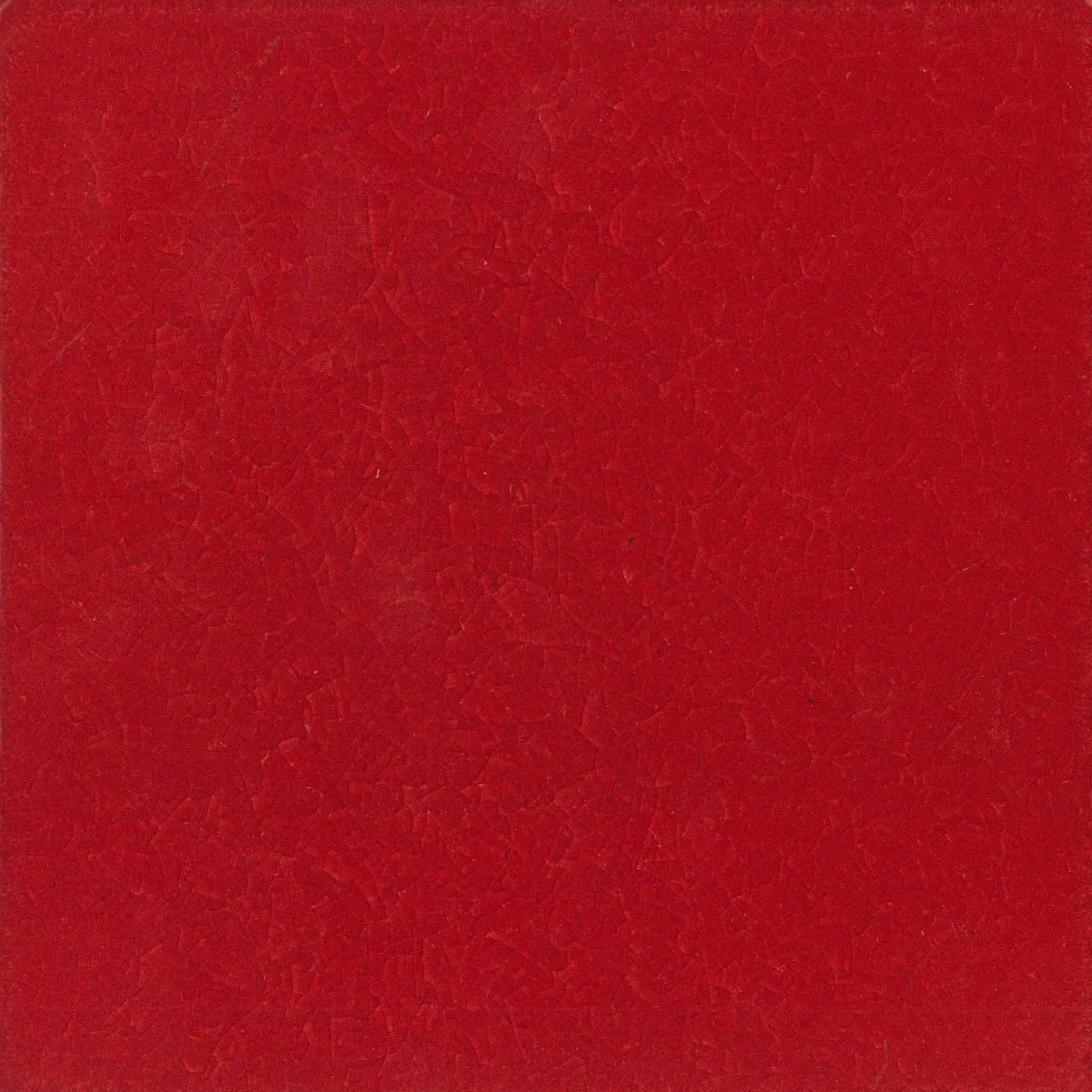
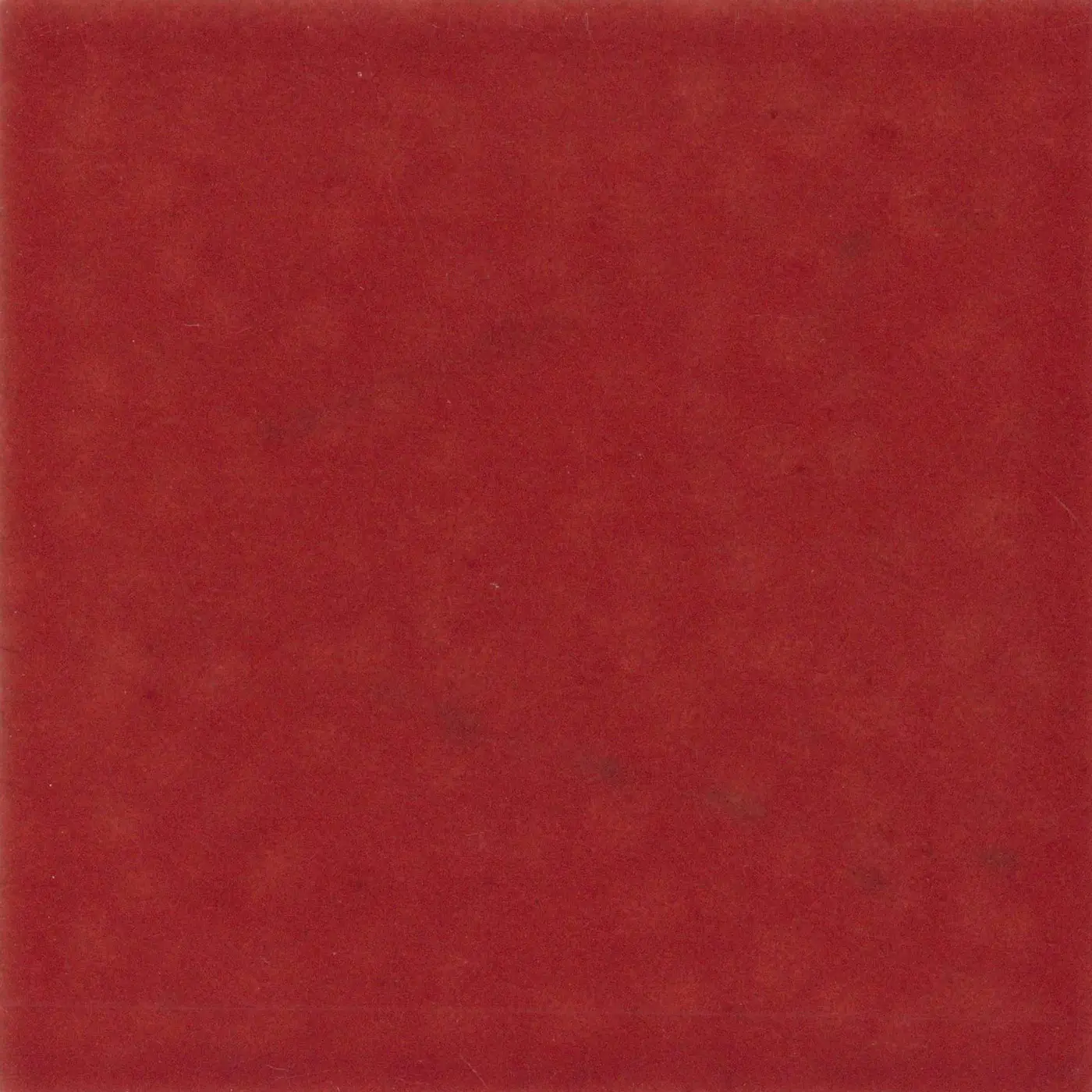
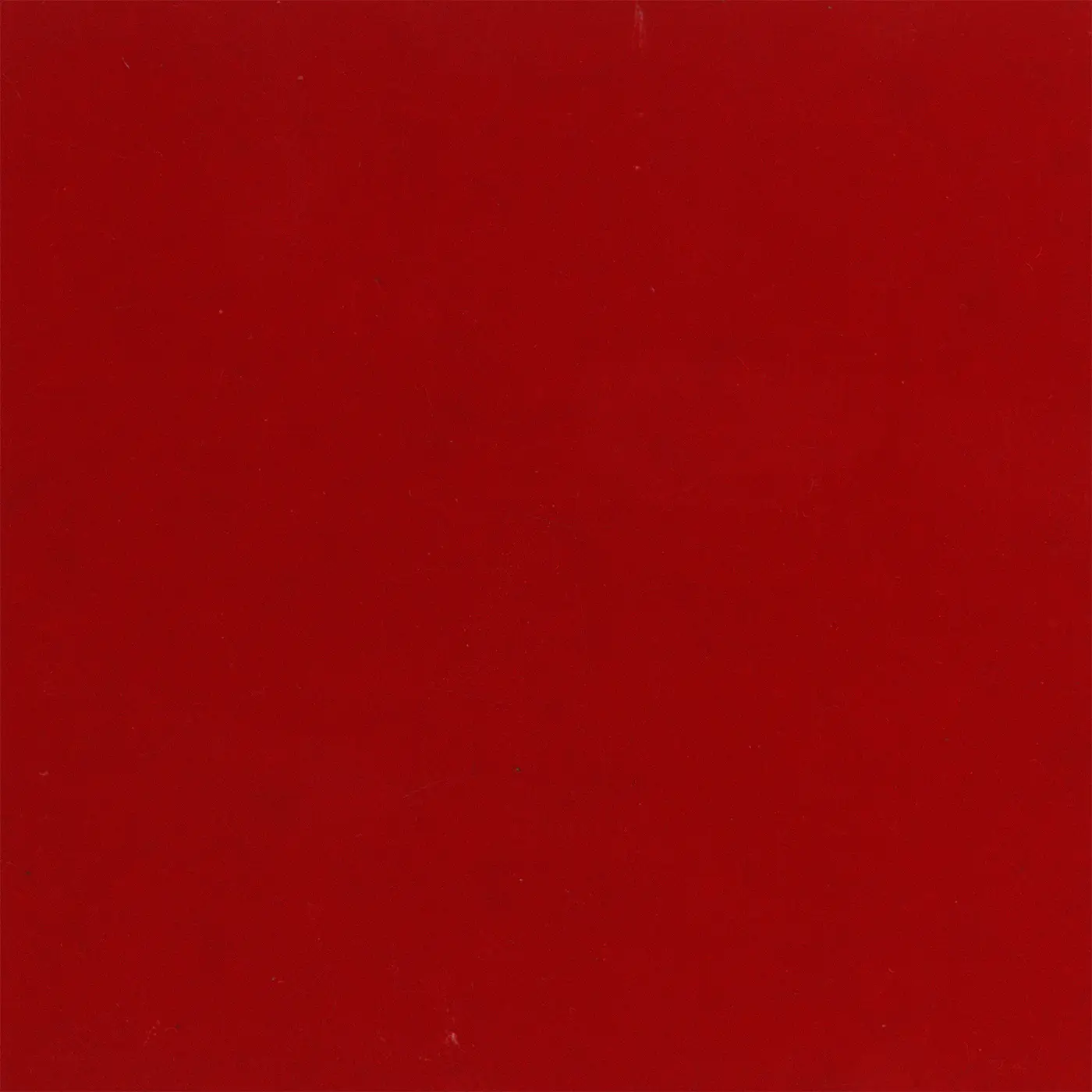
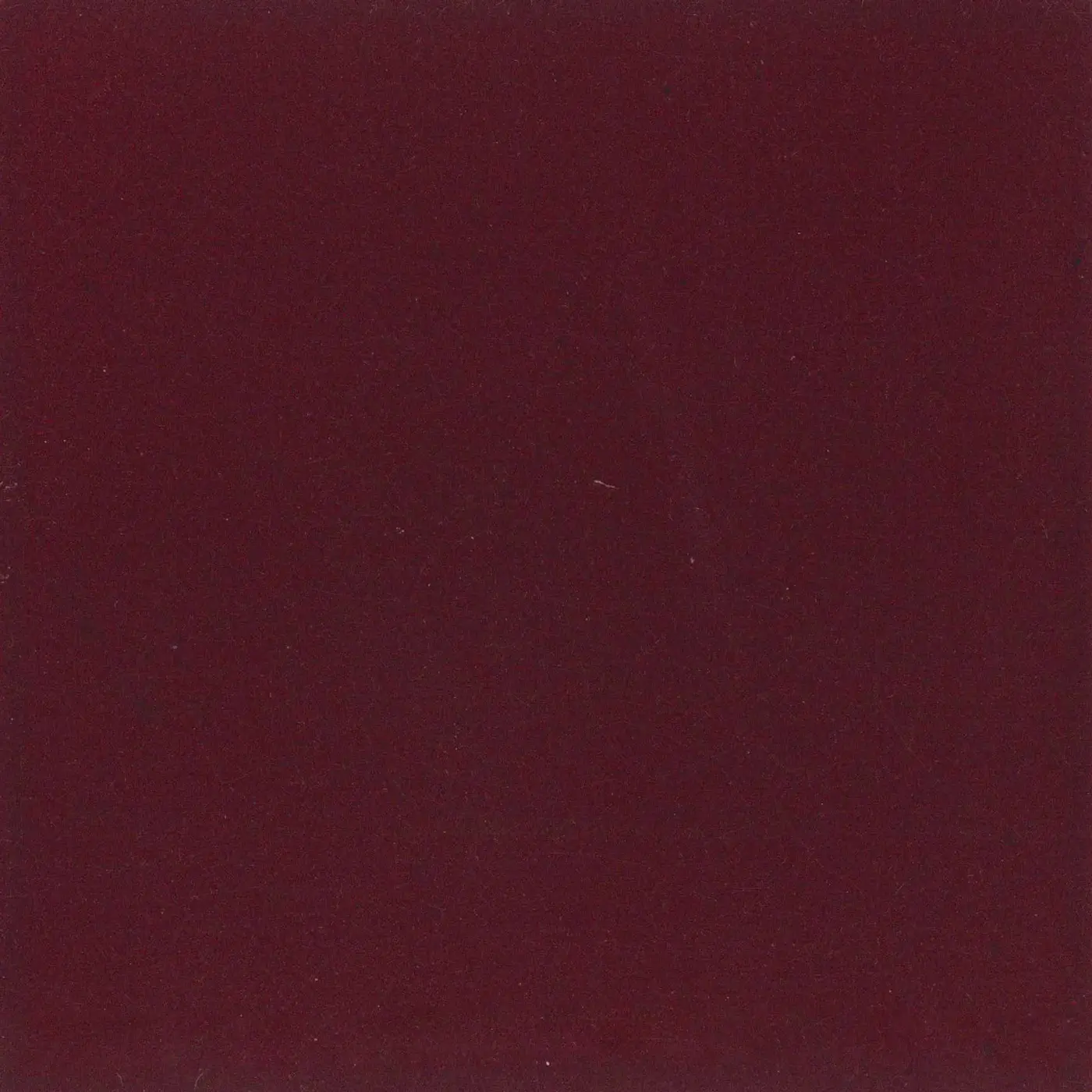
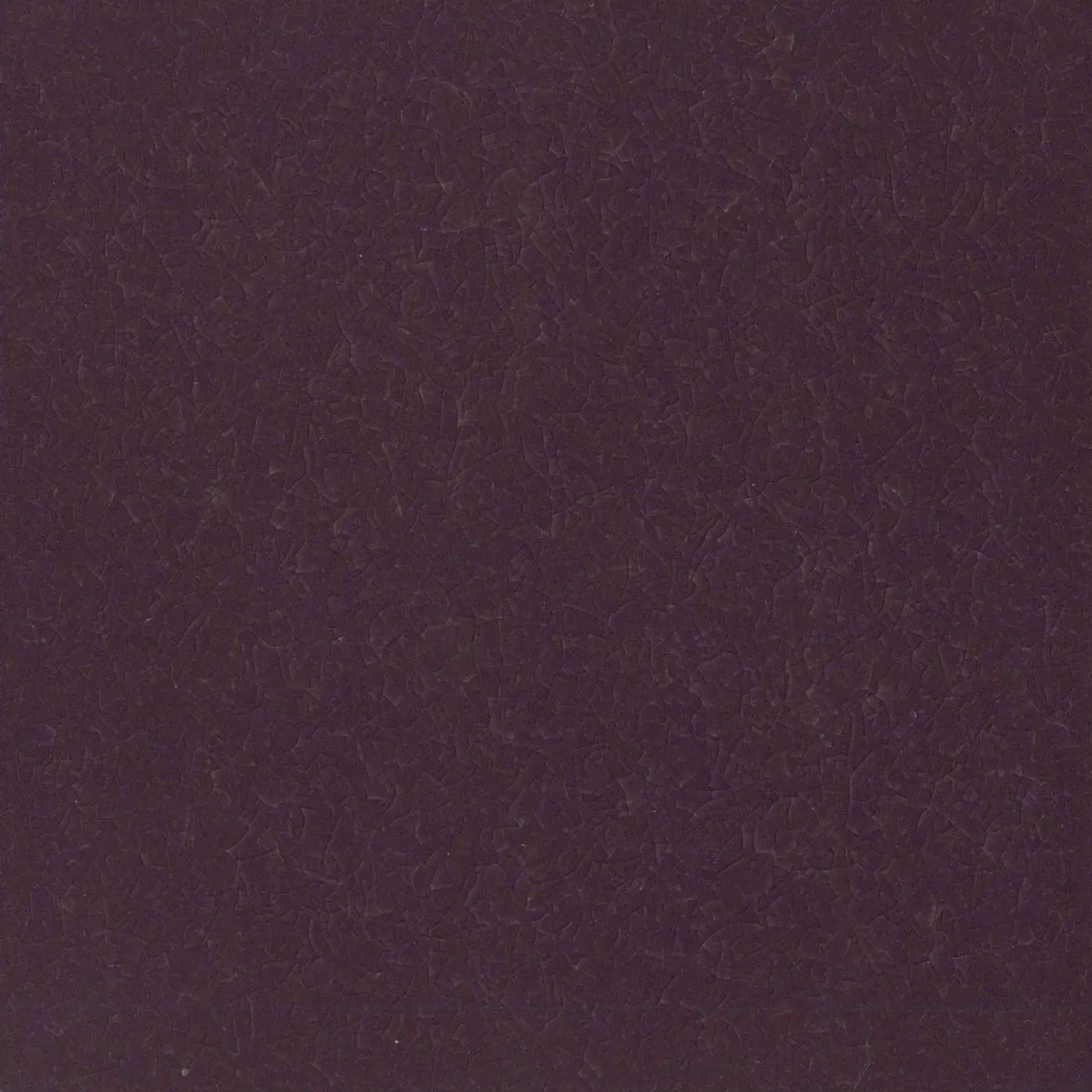
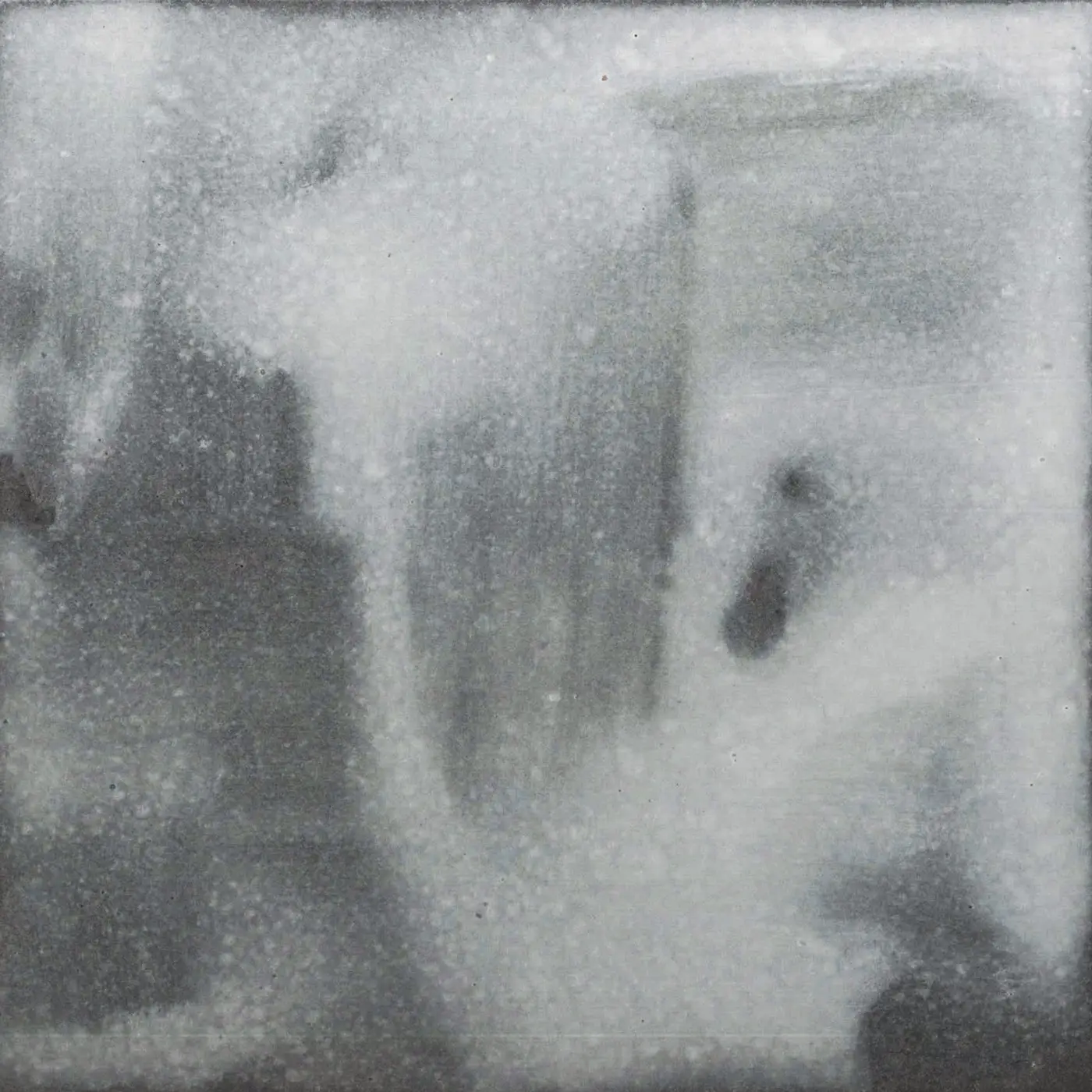
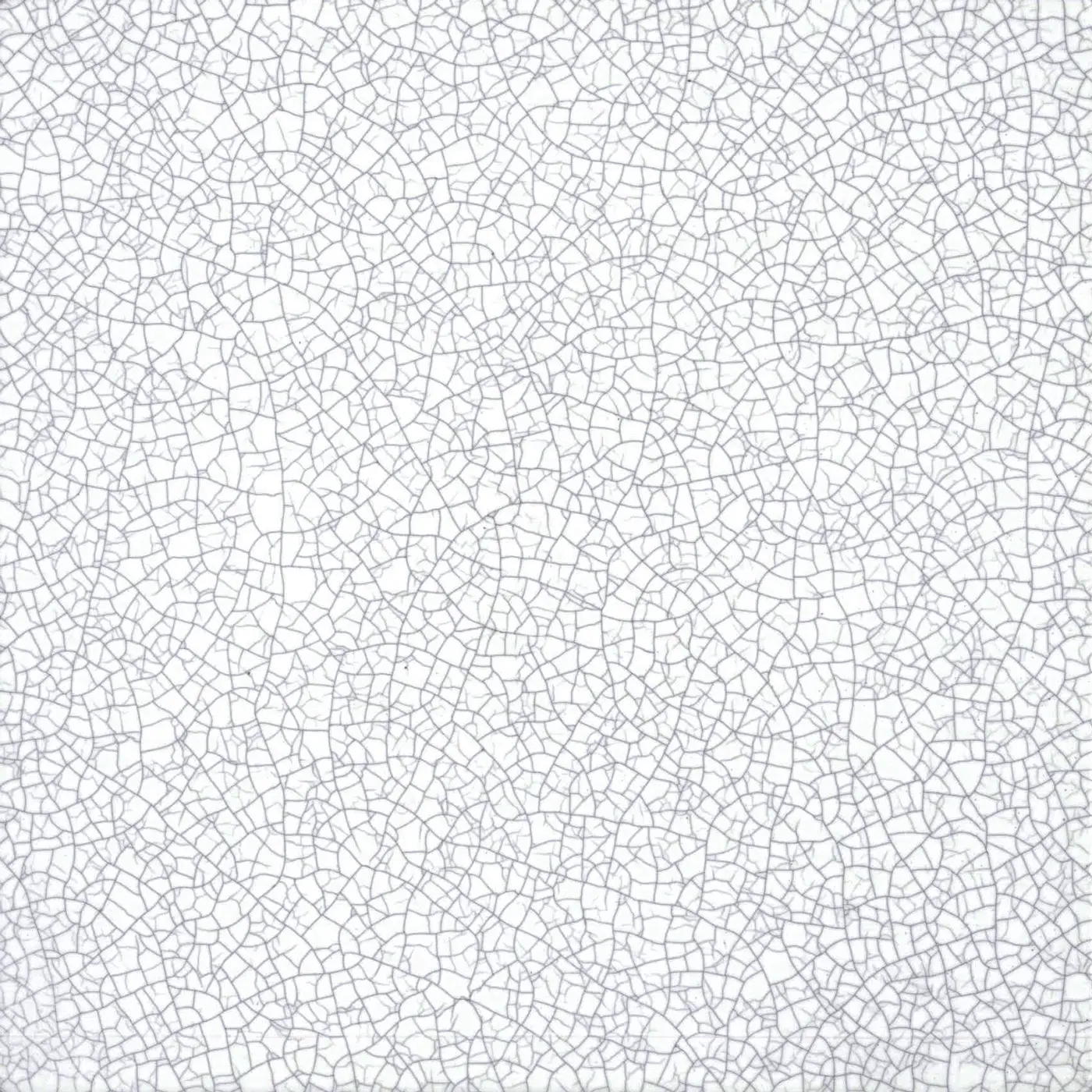
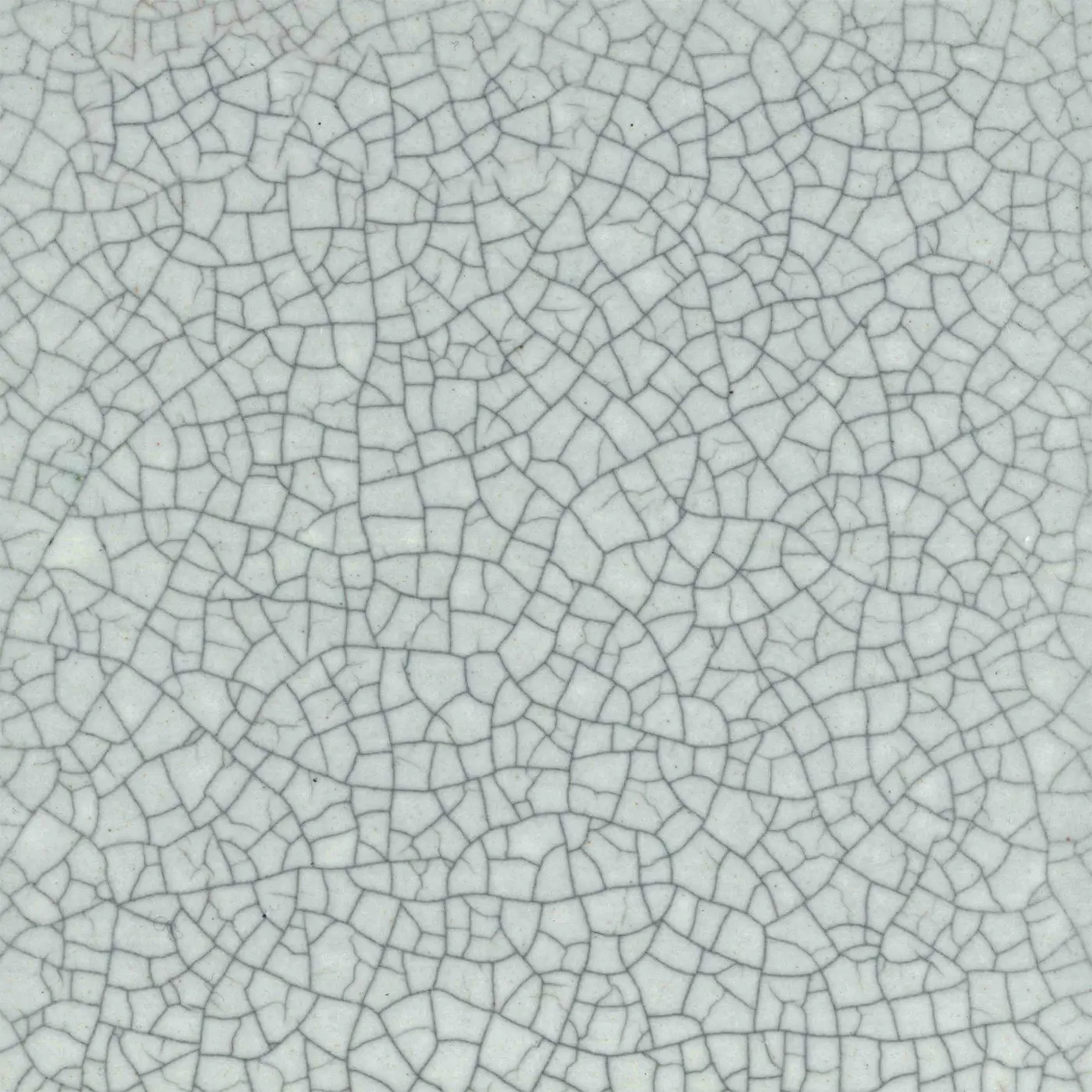
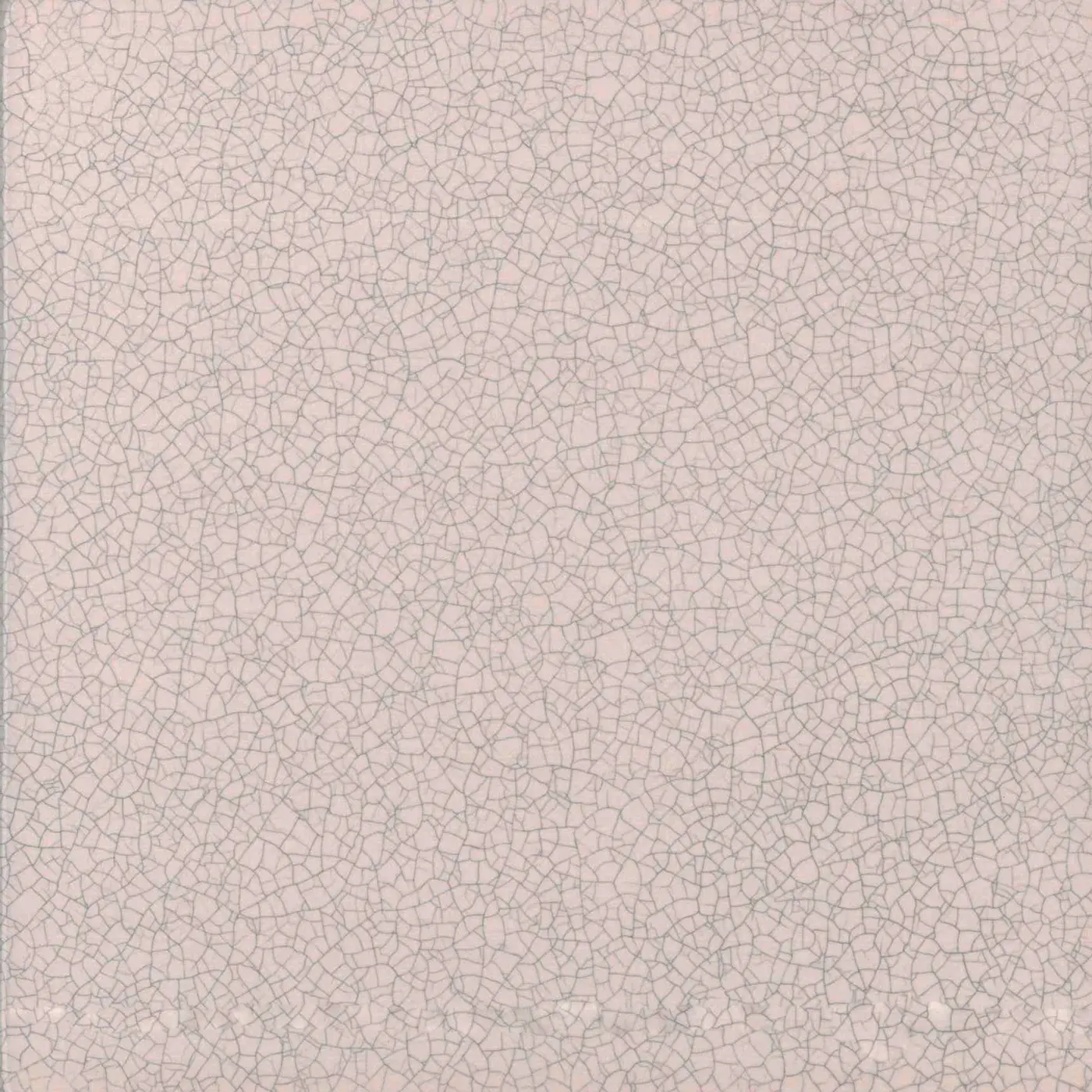
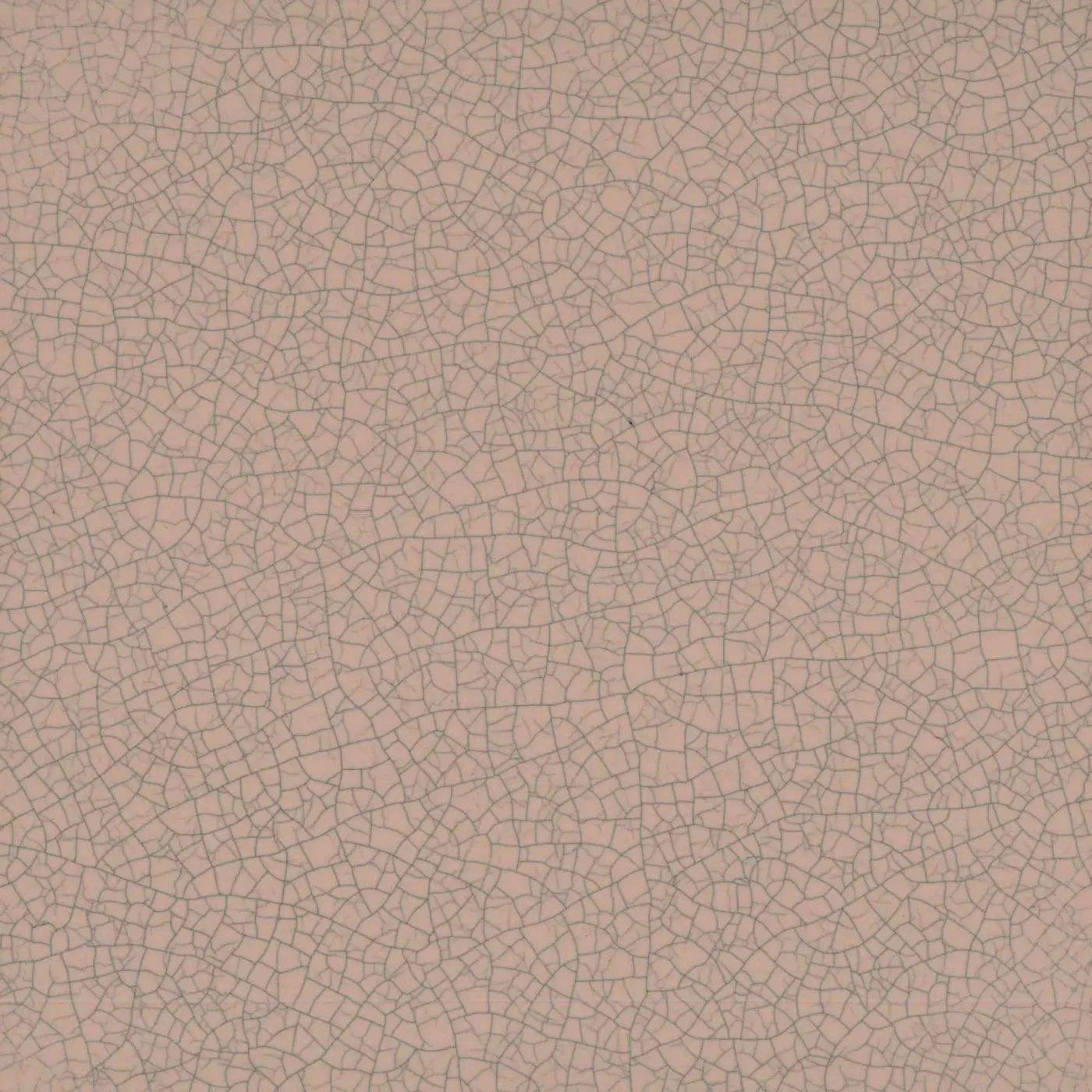
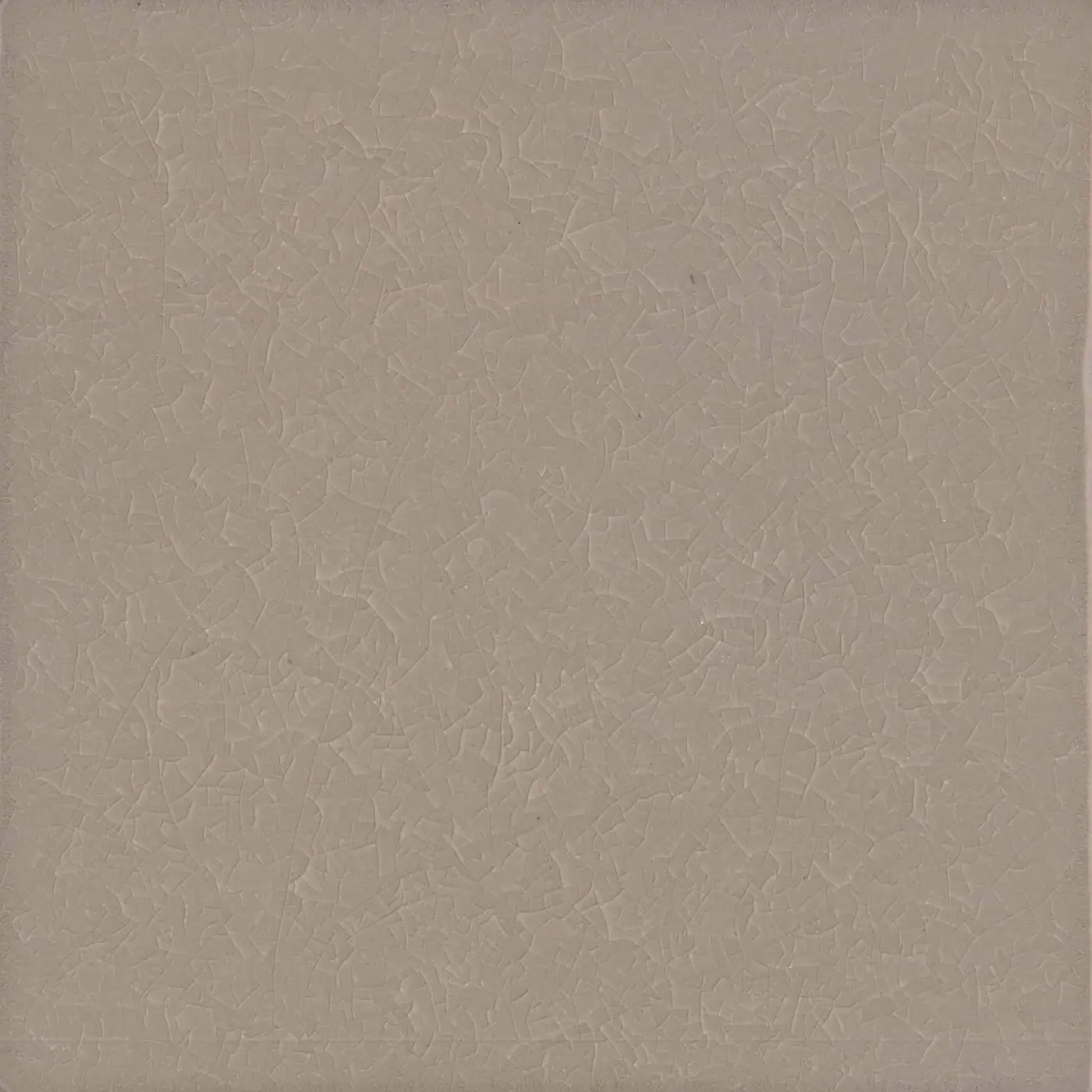





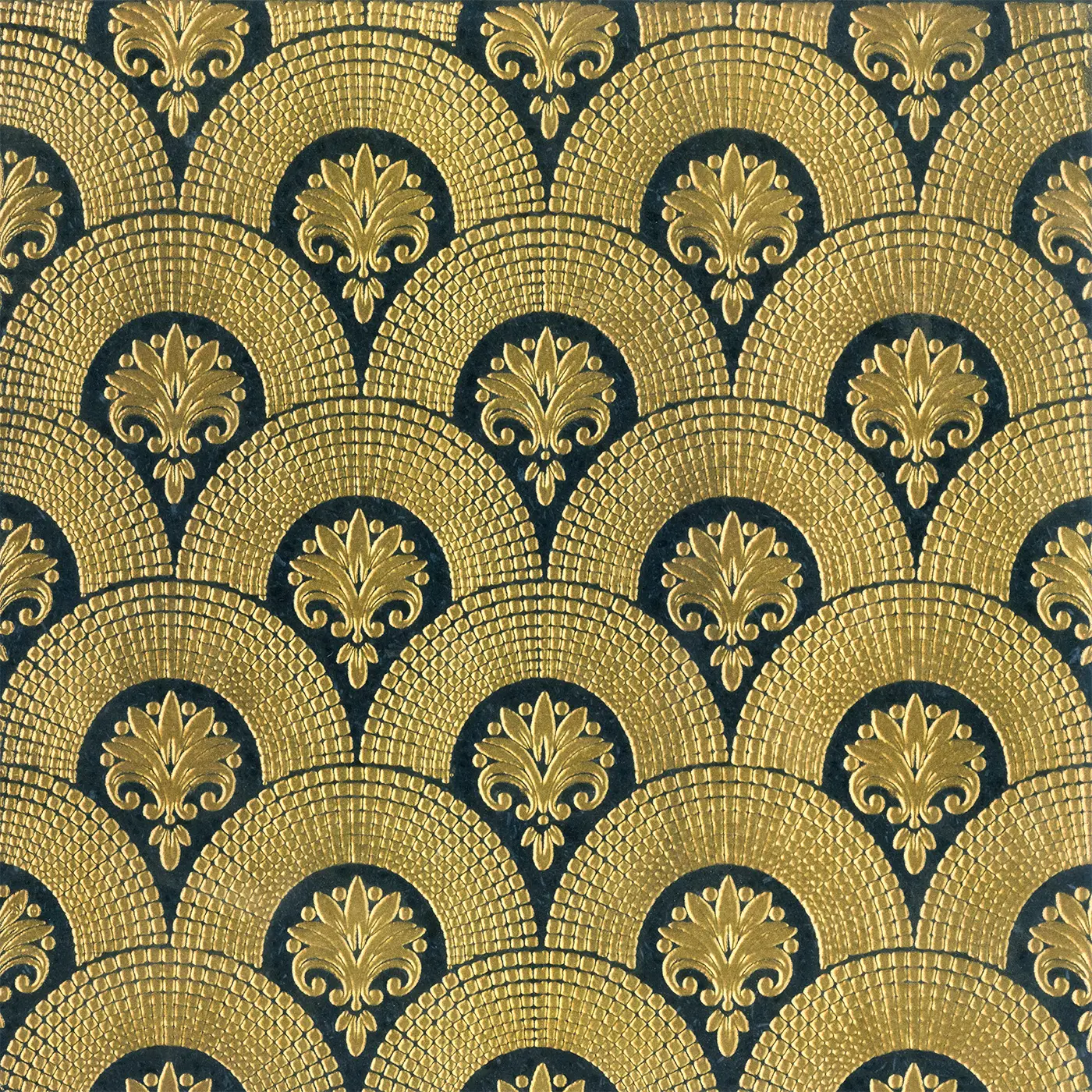

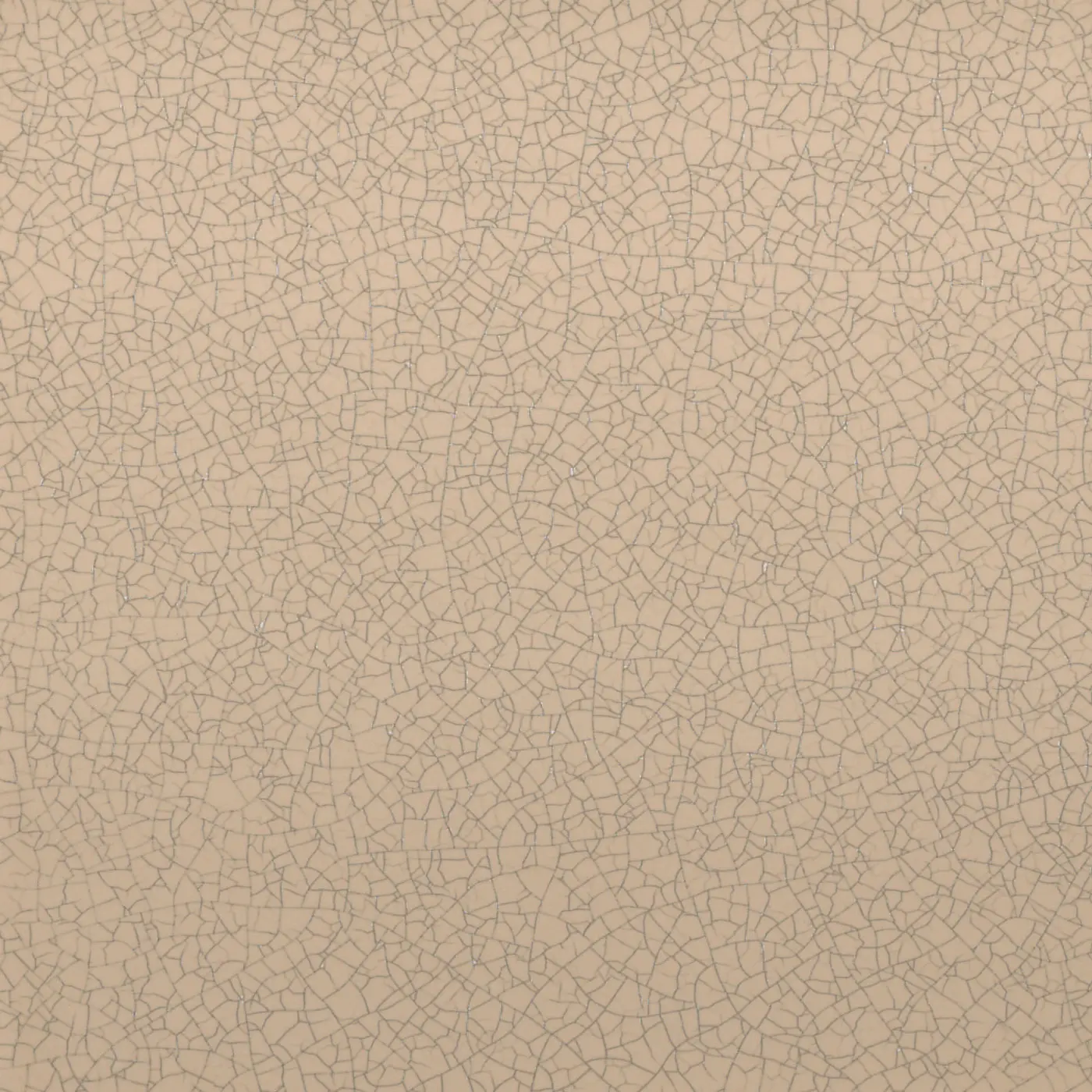






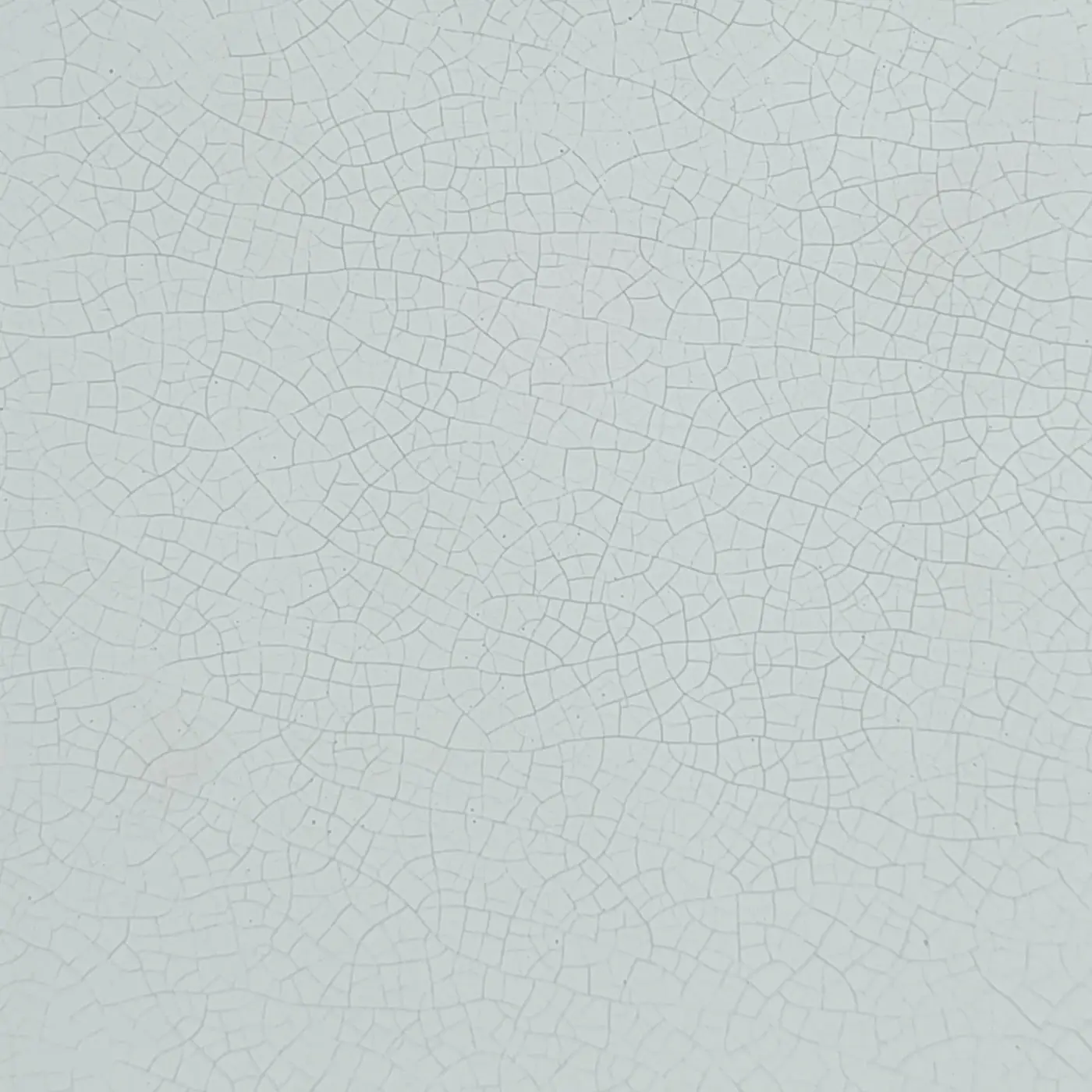
Depending on the color chosen, different finishes and enamel effects can be used. The most common effects are:
This glaze has no special color changes. The color is therefore flat without subtle differences, making the surface uniform and suitable for any type of surface, whether horizontal or vertical. It can provide all colors, smooth surface effects, or soft matte tones. It is very resistant to stains and impacts.
Before placing the crystalline layer on it, the enamel is applied. Thanks to its glass-like composition, the crystal finish can create beautiful color variations, emphasizing the craquelé effects and making colors brighter by accentuating the chromatic depth of the surface.
The surface of the stone is covered with a thin layer of crystalline enamel, which merges with the gray stone to enhance its characteristics. Firing in the oven will produce a luminous effect that will make the surface shine, but at the same time will not cause any color change.
| Parameter | Value / Definition |
|---|---|
| Commercial name | lava basalt |
| Category | stone material |
| Origin | Etna Volcano |
| Extraction | irregular blocks |
| Petrographic definition | effusive rock |
| Chemical Composition | prevalence of silicates |
| Absorption coefficient | 1.62% |
| Hardness | 5/6 Mohs |
| Simple compressive strength | 109 MPa |
| After frost test | 108 MPa |
| Sliding friction wear | 9.21 mm |
| Impact breaking test | 60 cm |
| Knoop microhardness | 4,260 MPa |
| Resistance to chemical agents | Unaffected |
| Surface finishes | sawn, honed, polished, bush-hammered |
| Colour | dark grey shades |
| Dimensions | free |
| Thicknesses | minimum 1 cm |
| Applicability | glue and mortar |
| Treatments | All possible treatments |
Table of chemical analysis of major elements (% by weight). Variation ranges are reported.
| Elements | Casting 1886 | Casting 1910 | Casting 1669 | Recent series |
|---|---|---|---|---|
| SiO2 | 48.95 – 49.57 | 49.61 – 49.67 | 48.01 – 50.05 | 47.15 – 49.20 |
| TiO2 | 1.38 – 1.47 | 1.43 – 1.52 | 1.21 – 1.43 | 1.51 – 1.87 |
| AI2O3 | 19.01 – 19.22 | 19.04 – 19.13 | 18.05 – 19.65 | 17.20 – 19.15 |
| Fe2O3 | 1.05 – 1.12 | 1.08 – 1.15 | 1.12 – 1.43 | 1.25 – 1.65 |
| FeO | 5.98 – 6.21 | 4.94 – 5.39 | 5.12 – 7.15 | 6.05 – 8.15 |
| CaO | 9.21 – 9.37 | 9.08 – 9.20 | 9.05 – 10.85 | 9.05 – 10.65 |
| MgO | 5.12 – 5.65 | 4.95 – 5.42 | 4.05 – 6.05 | 4.12 – 6.20 |
| Na2O | 3.51 – 3.75 | 3.55 – 3.78 | 3.05 – 3.95 | 3.12 – 4.05 |
| K2O | 1.42 – 1.65 | 1.45 – 1.68 | 1.05 – 1.85 | 1.12 – 2.05 |
Detected by the research laboratory of the Politecnico di Torino, they report the following declaration: The samples under examination do not contain toxic chemicals and presenting a global migration below the limits established by D.M. March 21, 1973, can be used for food purposes. Based on the chemical composition, the natural basalt under examination can be equated to category A lead-free glass objects.